The Best Jeans for Curvy Women
Disclosure: Some of the links in this post are affiliate links. This means if you click on the link and purchase an item, I will receive an affiliate commission at no extra cost to you.
Have you ever found a pair of jeans that fits your thighs perfectly, only to have a huge gap at the waist? Or maybe the opposite happens.
The waist fits, but the jeans are so tight around your hips and thighs that sitting down becomes a struggle. So you go up a size, and now you’re constantly pulling them up because they’re too loose.
And let’s not forget those jeans that feel perfect when you first put them on, but a few hours later, the waistband has stretched out, the knees are baggy, and the whole pair looks different.
If you’ve dealt with any of this, you’re definitely not alone.
Finding jeans when you have curves is not always as simple as picking your size. Your waist, hips, thighs, stomach, height, and even the fabric can change how a pair of jeans fits.
A size that works perfectly in one brand can feel completely wrong in another.
That’s why this guide is not about telling you that one style is the best for every curvy woman. It’s about helping you figure out what actually works for your body and your everyday life.
We’ll also talk about length, rises, washes, and the little details that can make a big difference.
Because a good pair of jeans shouldn’t just look good in the mirror. You should be able to sit down, walk around, bend over, and get through your day without thinking about your jeans every five minutes.
What Makes a Good Pair of Jeans for Curvy Women?
A good pair of jeans should fit your body without making you fight with them all day.
If you’ve ever had to keep pulling up your waistband or deal with a gap at the back, you know how frustrating it can be.
The right jeans should feel comfortable when you’re standing, sitting, and moving around. They should also stay where they are without needing constant adjustment.
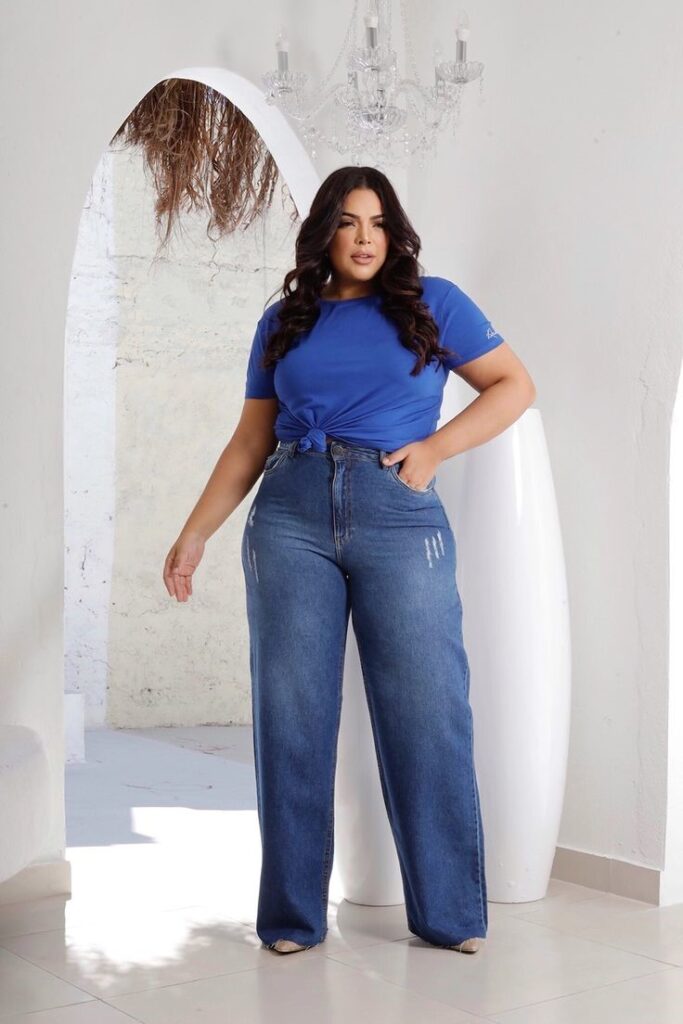
Check the Fit Around Your Hips and Thighs
Start by paying attention to where the jeans feel tight. If they fit your waist but pull across your hips and thighs, they may not have enough room in those areas.
Trying the next size up can help, However, you may then end up with a loose waistband. This is where curvy-fit jeans can make a real difference.
They are usually cut with more room through the hips and thighs while keeping the waist closer to the body.
You should also check for pulling around the front and back. If the fabric feels stretched when you’re standing normally, try sitting down. You may notice the difference immediately.
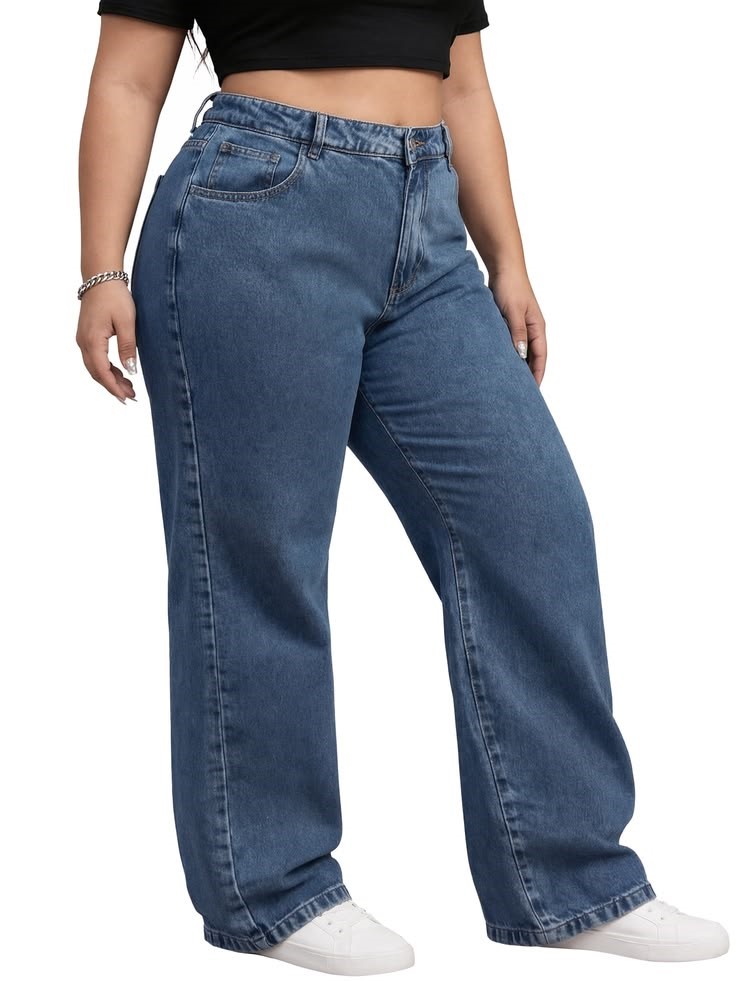
Pay Attention to the Waistband
The waistband should stay in place without digging into your stomach. It should also sit comfortably when you sit down.
If there’s a large gap at the back, the jeans may not match your waist-to-hip proportions. A contoured waistband or a curvy-specific cut may work better.
Don’t be afraid to try a different size or style. The number on the label matters less than how the jeans actually fit.
Don’t Ignore Stretch
A little stretch can make jeans much more comfortable. This is especially helpful if you have fuller hips or thighs.
But more stretch isn’t always better. Some very stretchy jeans feel great at first and then become loose around the waist or knees after a few hours.
Look for jeans that give you room to move without losing their shape easily. You want to be able to move comfortably without the jeans becoming baggy too quickly.
Think About Your Overall Shape
Your proportions can also affect which jeans feel best. If you’re still figuring out what works for you, The Ultimate Plus Size Outfit Guide for Every Body Shape can help you understand your proportions before choosing a particular cut.
Most importantly, don’t test jeans while standing still. Sit down, walk around, bend over, and move your legs. Your jeans need to work for your everyday life, not just look good in a fitting-room mirror.
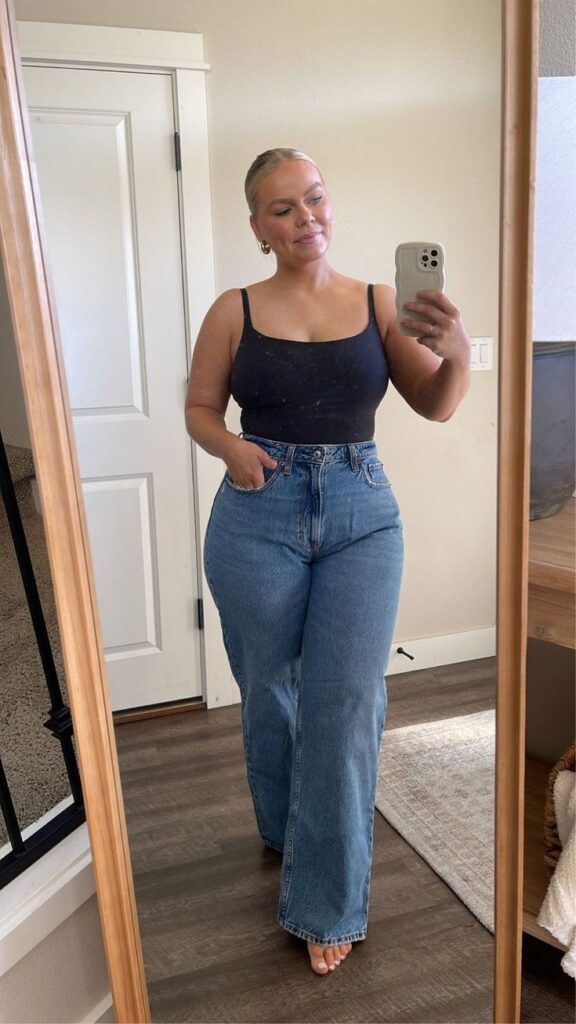
The Best Jean Styles for Curvy Women
Not every pair of jeans is going to work the same way on a curvy body. Skinny jeans may look great but feel uncomfortably tight around the thighs.
Wide-leg jeans can look fantastic on someone else, yet feel like too much fabric when the fit isn’t right.
That doesn’t mean those styles are off-limits. The real issue is finding a cut that gives enough room where it’s needed without making the rest of the jeans feel loose or uncomfortable.
Instead of asking which jean style is “most flattering,” think about what you want from your jeans. Do your thighs need more room?
Does the waistband always gap at the back? Are you looking for something comfortable enough for everyday errands? Or do you want a pair that can make a simple outfit look more polished?
Here are the styles worth considering and what to look for when shopping for each one.
Straight-Leg Jeans: A Reliable Everyday Option
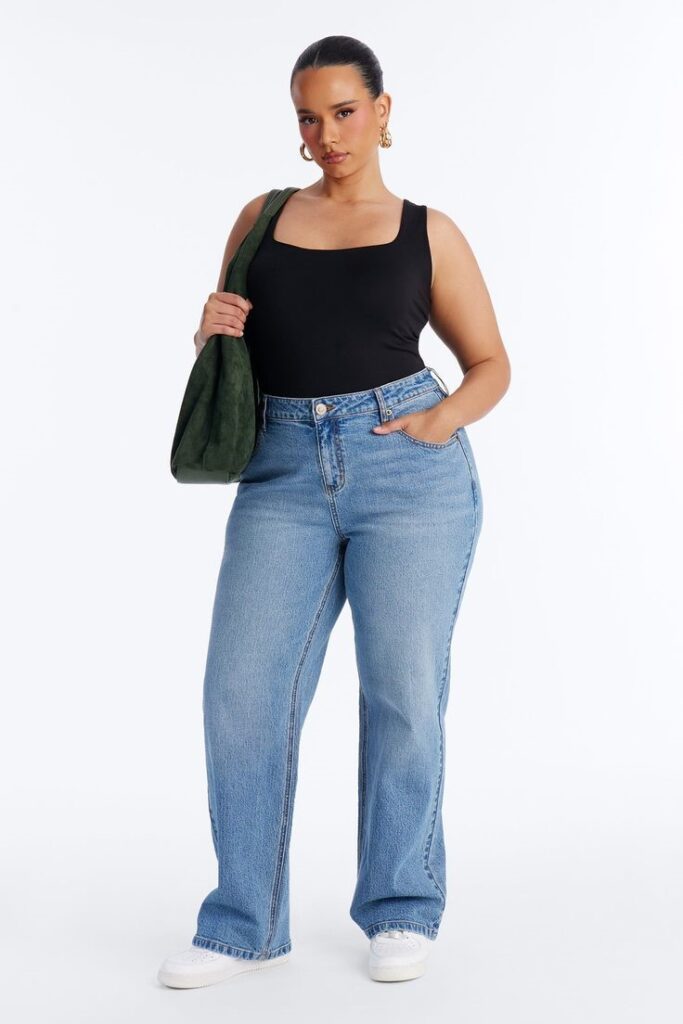
Straight-leg jeans are one of those pairs that can save you on days when you have no idea what to wear.
They give your thighs and legs more breathing room than skinny jeans, but they don’t have the extra volume that comes with a wide-leg style.
They are especially useful if skinny jeans feel too tight around your thighs, while relaxed jeans feel a little too loose.
The straight cut gives you that comfortable middle ground without making the outfit look shapeless.
And styling them is easy. Throw on a T-shirt and sneakers for a simple everyday look, or add a tucked-in blouse, blazer, and loafers when you want to look more put together.
For more ways to make this versatile style work, check out Straight-Leg Jeans Outfit Ideas.
Bootcut Jeans: Great If You Want More Balance
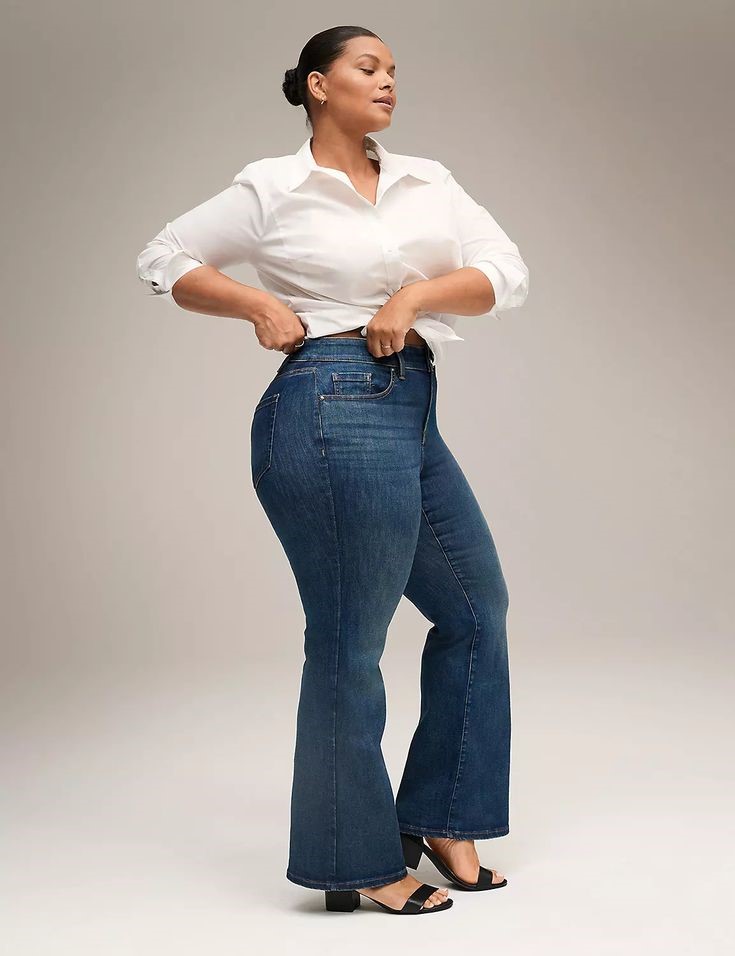
Bootcut jeans are fitted through the hips and thighs before opening slightly from the knee down.
That small change can make them a comfortable option when the upper legs need more room but a completely loose leg isn’t appealing.
They are also easy to dress up. Try them with ankle boots, flats, or a low heel depending on the occasion.
If jeans often feel tight around the thighs, bootcut is worth trying before automatically reaching for a larger size.
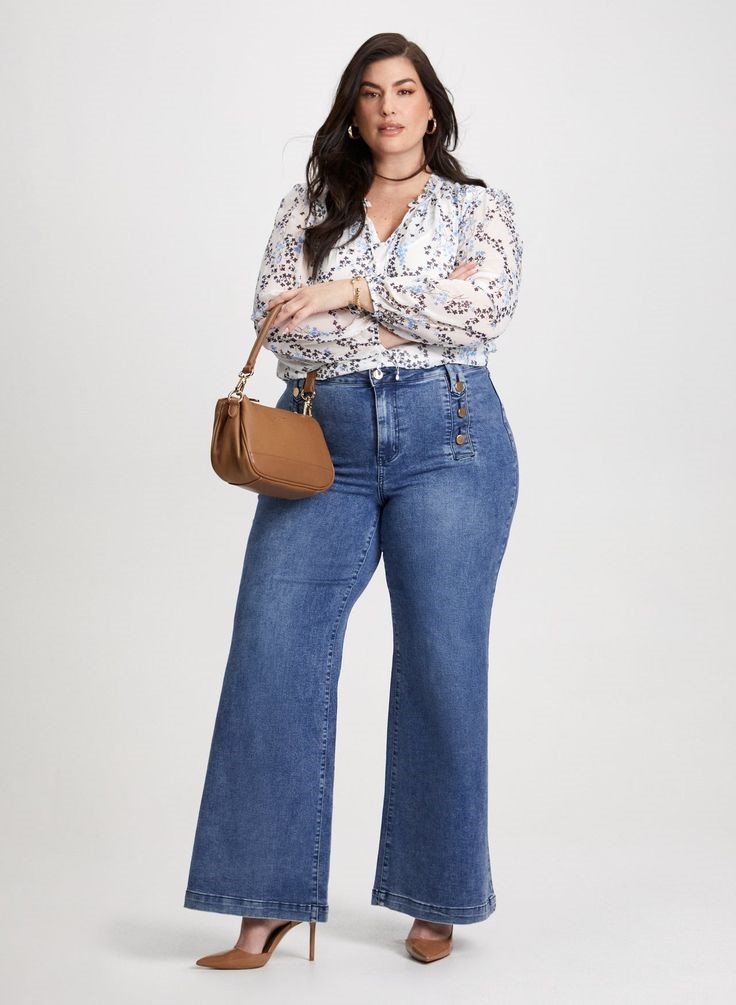
Wide-Leg Jeans: Roomy Without Looking Oversized
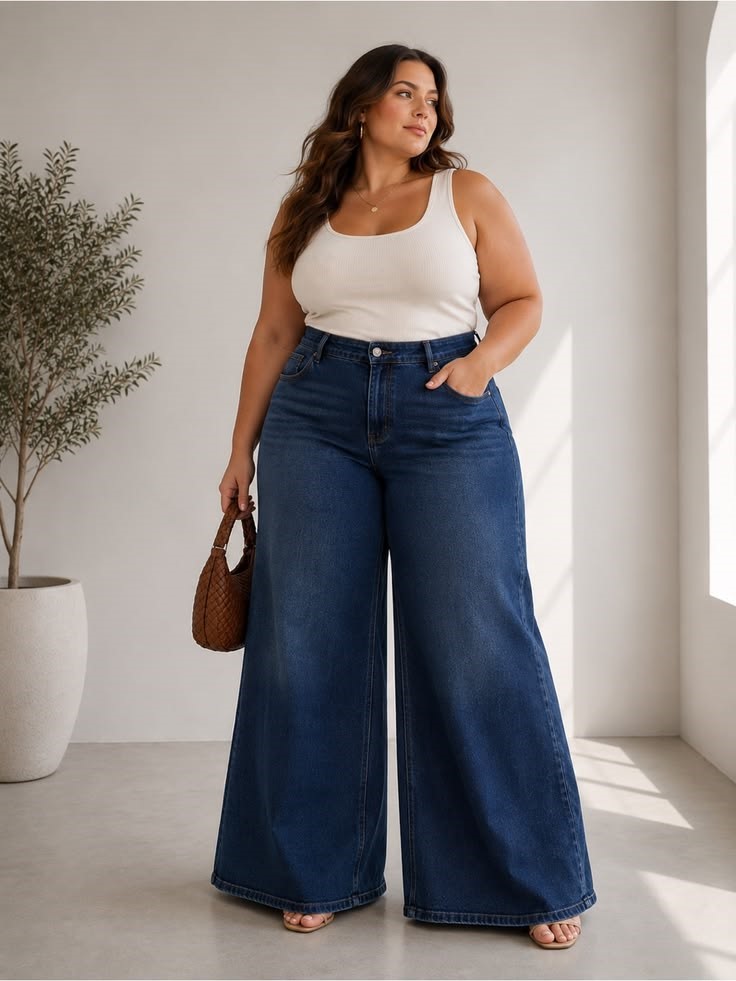
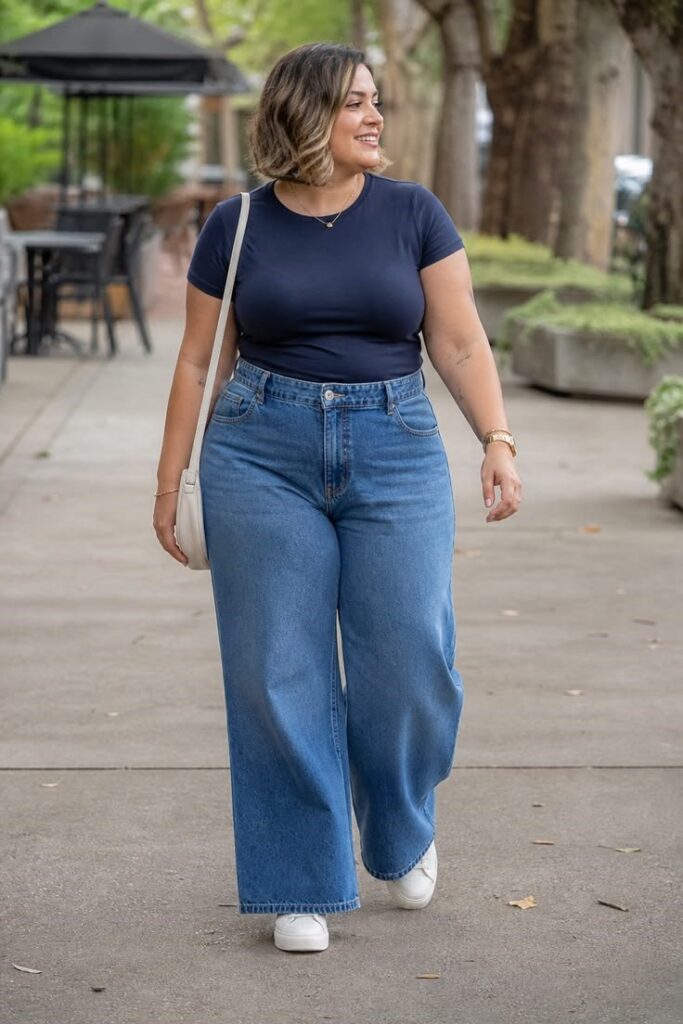
Wide-leg jeans can be a great choice when comfort is a priority. The extra room through the legs makes them easy to move around in, and they can make a simple top-and-jeans outfit look more intentional.
The fit around the waist and hips is what makes the difference.
A waistband that is too loose can make the entire outfit look oversized. When the waist and hips fit properly, the wider leg looks deliberate rather than simply too big.
For easy styling ideas, see Wide-Leg Jeans Outfit Ideas.
Skinny Jeans: Don’t Rule Them Out
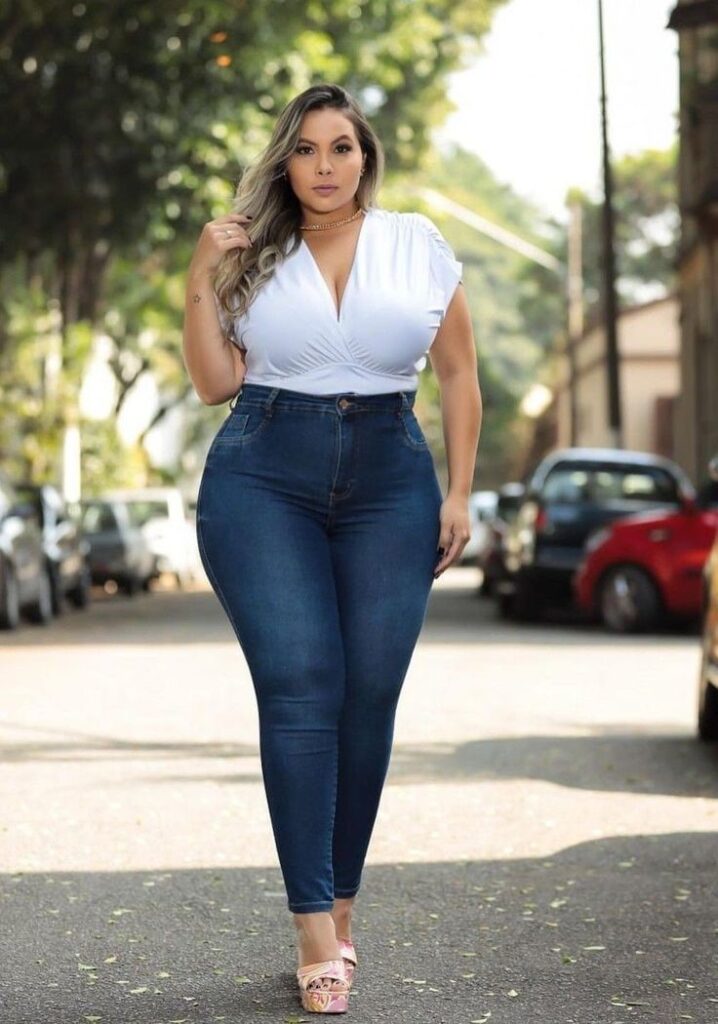
Skinny jeans may not be everyone’s first choice these days, but there’s no reason to stop wearing them if they suit your personal style.
Trends change, but a style that feels good on your body never really goes out of use.
Comfort is the main thing to check. Look for enough stretch through the hips and thighs, and make sure the waistband doesn’t dig in when sitting.
The jeans should feel fitted without making it difficult to move comfortably.
Skinny jeans also pair well with longer tops, loose sweaters, and blazers. For more ideas on balancing fitted jeans with roomier pieces, see How to Wear Oversized Blazers Without Losing Shape.
If you like a fitted look, focus on finding a pair that fits comfortably rather than worrying about whether skinny jeans are currently trending.
Flare Jeans: Worth Trying for a Longer Look
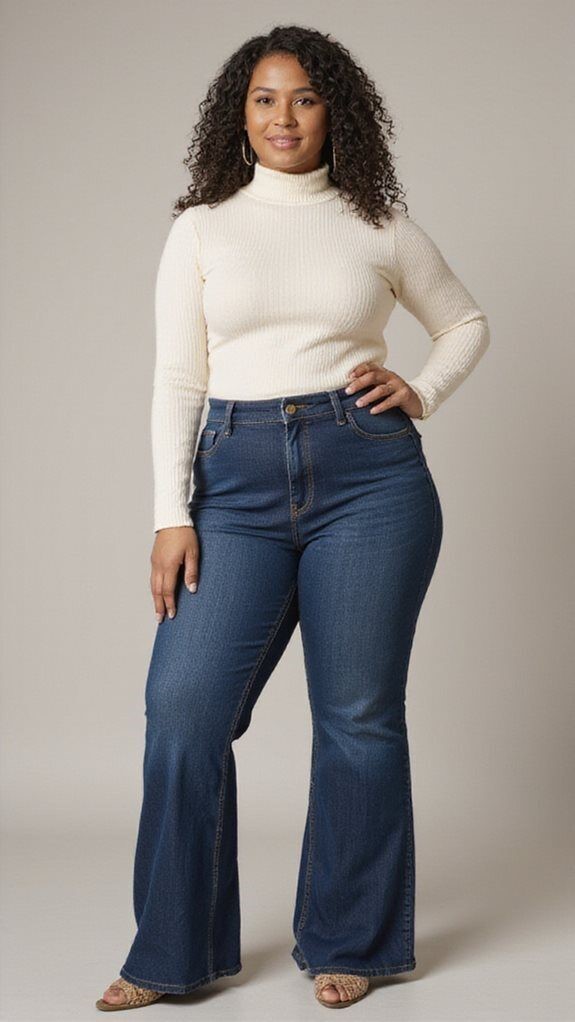
Flare jeans are fitted through the hips and thighs and then become noticeably wider below the knee. They have more shape than bootcut jeans and can completely change the feel of a simple outfit.
They can be a useful choice when the goal is to add more volume around the lower leg. The wider hem can also create a longer-looking line when the jeans are the right length.
The biggest thing to get right is the length. Flare jeans usually need to be long enough to reach close to the top of your shoes. If they’re too short, the flare can look cut off.
Before buying, think about which shoes will be worn with them. A pair of flares that works with heels may be too long for flat shoes.
For a simple outfit, try a fitted or tucked-in top with the jeans. A structured jacket or blazer can also make the outfit feel more polished.
If you want more ideas for creating a balanced outfit, 25 Outfit Tricks That Create a More Balanced Silhouette is worth reading.
6. Relaxed or Boyfriend Jeans: When Comfort Comes First
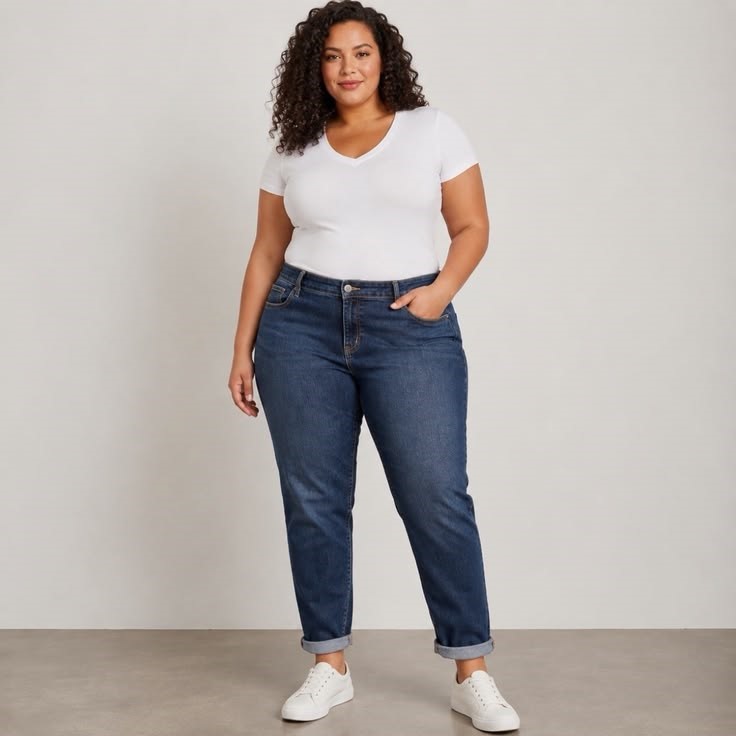
Relaxed and boyfriend jeans have a looser fit through the hips, thighs, and legs. They’re a good option for casual days when squeezing into fitted denim is the last thing you want to do.
The challenge is finding the difference between relaxed and simply too big.
The waistband should still fit properly. The jeans should have enough room to move without falling down or creating excessive fabric around the hips.
If the entire pair looks several sizes too large, the problem may be the fit rather than the style.
These jeans work well with simple tops, fitted tanks, T-shirts, sneakers, and casual sandals. Rolling the hem slightly can also give them a more relaxed look, especially when paired with sneakers or flats.
If the goal is comfortable jeans that don’t cling to the body, this style is worth trying. For more casual combinations, 30 Cute Plus Size Weekend Outfit Ideas has plenty of inspiration.
7. High-Rise Jeans: Helpful for Waist Support
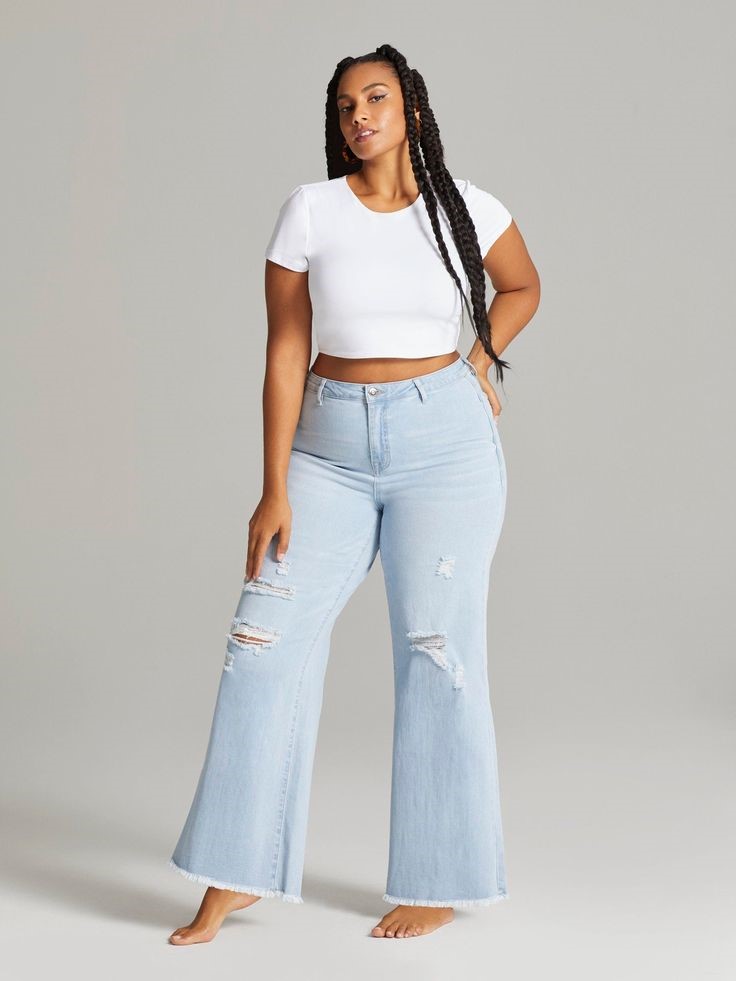
High-rise isn’t technically a leg shape, but the rise can completely change how jeans feel and fit.
A higher rise sits closer to the natural waist and gives more coverage through the stomach and back. Some women love this because the jeans feel more secure and don’t slide down when they sit or bend.
However, high-rise doesn’t automatically mean comfortable.
If the waistband cuts into the stomach when sitting, the rise may be too high for your torso or the jeans may simply be too tight. A mid-rise pair can sometimes feel much better.
The best rise depends on your proportions and personal comfort. Try sitting down before deciding whether a high-rise pair works for you.
Which Style Should You Try First?
If you’re buying your first really good pair of jeans, start with the style that solves your biggest problem.
If fuller thighs are the main concern, straight-leg, bootcut, relaxed, and wide-leg jeans are all worth trying.
A stretchy skinny or straight-leg pair can give a fitted look without feeling overly restrictive.
For more shape through the hips with a wider hem, bootcut and flare jeans are good options.
When comfort is the priority, relaxed or wide-leg styles give the legs more room to move.
And if the biggest problem is a waistband that never seems to fit your hips and waist at the same time, focus less on the leg style and more on finding a curvy-specific cut.
How to Find Jeans That Actually Fit goes into more detail about waist gaps, measurements, stretch, and the signs that a pair of jeans isn’t fitting properly.
There is no rule saying one style has to be your only option. A practical denim wardrobe can have different cuts for different days, outfits, and levels of comfort.
Once the fit is right, even a simple pair of jeans can become one of the most useful pieces in your wardrobe.
How to Choose the Right Rise for Curvy Jeans
If you’ve ever bought jeans that fit well around your hips but feel uncomfortable around your stomach, the rise could be the reason.
So, what exactly is the rise?
The rise is the distance from the middle of the crotch area up to the top of the waistband. In simple terms, it tells you how high or low the jeans sit on your body.
This matters when shopping for curvy jeans because two pairs can have the same waist and hip measurements but feel completely different depending on where the waistband sits.
The right rise can help your jeans stay in place, feel more comfortable when sitting, and give you the amount of coverage you prefer.
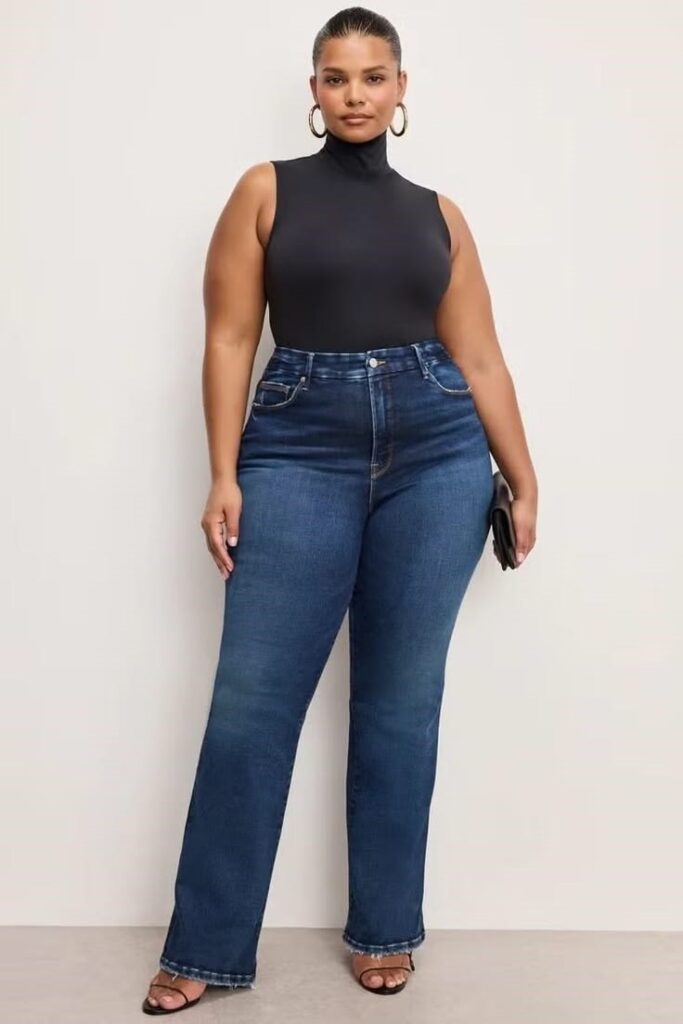
High-Rise Jeans
High-rise jeans sit closer to your natural waist and give more coverage around the stomach and back.
They can be a good choice if you like jeans that feel secure and don’t slide down when you sit or bend.
However, high-rise doesn’t automatically mean comfortable. If the waistband digs into your stomach or feels too tight when sitting, try a different cut or rise.
Mid-Rise Jeans
Mid-rise jeans sit between the hips and natural waist. They can be a good middle ground if high-rise jeans feel too restrictive but low-rise styles don’t give you enough coverage.
They’re also easy to wear with everyday tops such as T-shirts, blouses, and sweaters.
Low-Rise Jeans
Low-rise jeans sit lower on the hips and can work well if that’s the fit you naturally prefer. They can also be a good option if high-rise jeans feel uncomfortable around your stomach.
The important thing is whether the jeans stay where they should when you move. If you’re constantly pulling them up or adjusting the waistband, the rise may not be right for you.
There isn’t one “best” rise for every curvy woman. Your comfort, proportions, and personal preference all matter.
If you’re still figuring out what works for your shape, How to Dress for Your Body Shape can help you understand how different clothing cuts work with your frame.
How Much Stretch Should Curvy Jeans Have?
Let’s talk about stretch, because this is one of those things that can make or break a pair of jeans.
You know those jeans that feel amazing when you first put them on, but a few hours later the waist is loose and the knees are starting to look baggy? That’s usually where the type of denim matters.
A little stretch can make a big difference if you have fuller hips or thighs. It allows the jeans to move with your body instead of feeling stiff when you sit, walk, or bend down.
This can be especially helpful if you’ve ever found a pair that fits your waist but feels too tight around your thighs.
At the same time, don’t assume that the stretchiest jeans will be the most comfortable. Denim with too much stretch can lose its shape as you wear it.
You may start the day with a great fit and end it wondering why your jeans suddenly feel two sizes bigger.
What you’re really looking for is a balance. The jeans should have enough give to let you move comfortably, but they should still bounce back and keep their shape after you’ve been wearing them for a while.
And don’t forget to test them before buying. Sit down, bend your knees, walk around, and see how the denim feels.
If it already feels uncomfortably tight while you’re standing, it probably won’t become more comfortable after you’ve been wearing it for several hours.
For more practical tips on avoiding denim mistakes that can affect the way an outfit looks, Jeans Mistakes That Make Outfits Look Frumpy is worth checking out.
How to Stop the Waist Gap in Jeans
Let’s talk about that annoying gap at the back of your jeans.
The hips and thighs might fit perfectly. The jeans may even look great from the front, but then you turn around and notice that annoying gap between your waist and the waistband.
Add a belt, and the extra fabric starts bunching around your waist. Leave the belt off, and you’re constantly pulling your jeans back up.
Sound familiar?
The problem isn’t necessarily your size. Your waist and hips simply may not have the same proportions as the jeans were cut for.
This is where curvy-fit jeans can really help. Curvy-fit jeans are designed with extra room around the hips and thighs and a more shaped waistband.
They’re made for women who have a bigger difference between their waist and hips and regularly deal with that annoying gap at the back.
When shopping, you may see terms such as “curvy fit,” “curve fit,” or styles described as “curvy straight-leg” or “curvy bootcut.” These aren’t necessarily plus-size jeans.
A woman in almost any clothing size can benefit from a curvy cut if her waist and hips have different proportions.
Instead of sizing up just to fit your thighs, a curvy-fit pair can give you the room you need without leaving the waistband too loose.
When shopping online, check the waist and hip measurements instead of relying only on the size number.
Reviews can also be incredibly helpful. Look for comments about waist gaps, tight thighs, or whether the jeans stay up throughout the day.
Most importantly, remember this: a waist gap doesn’t mean there’s something wrong with your body. It usually means the jeans aren’t shaped for your proportions.
Sometimes, finding the right pair simply means looking for a cut that was designed with those proportions in mind.
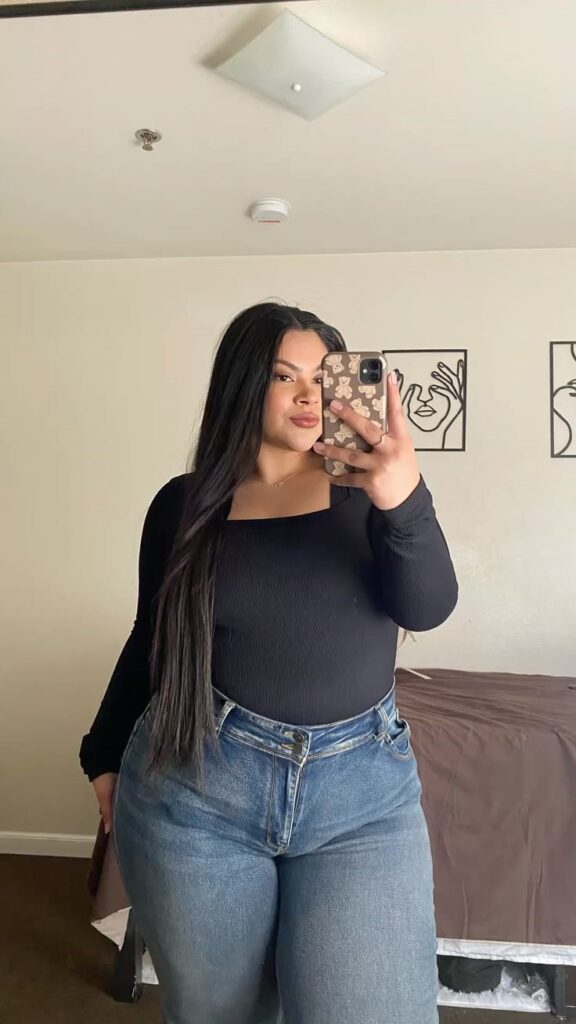
How to Know If Your Jeans Actually Fit
A pair of jeans can look perfect in the mirror and still be a terrible choice once you start moving. That’s why standing still in front of the fitting-room mirror isn’t enough.
Start by sitting down. Notice what happens around your stomach, hips, and thighs.
If the waistband suddenly feels much tighter or the button presses into your stomach, don’t ignore it just because the jeans looked good while standing.
Take a few steps around the store too. Bend down, cross your legs, or sit on a chair if there’s one nearby.
It might feel a little awkward, but it’s better than getting home and realizing the jeans are uncomfortable after ten minutes of normal movement.
Now check the thighs. Some pulling is normal, especially with fitted denim, but deep lines stretching across the fabric can mean the jeans are working too hard to fit around your thighs.
If the pockets are pulling open, that’s another sign that you may need more room.
Then check the waistband. It shouldn’t leave you feeling squeezed, but it shouldn’t hang away from your back either.
If there’s enough space to slide several fingers between your waist and the waistband, the jeans may need a different cut.
Finally, look at yourself from the side and back. This is where you may notice things that aren’t obvious from the front, such as bunching around the crotch, excess fabric at the seat, or pockets sitting in an odd position.
And don’t assume a different size will automatically fix everything. Sometimes the real problem is the cut.
If you’ve ever wondered whether the size on the label is actually right for you, You’re Probably Wearing the Wrong Size (Here’s How to Tell) is worth reading.
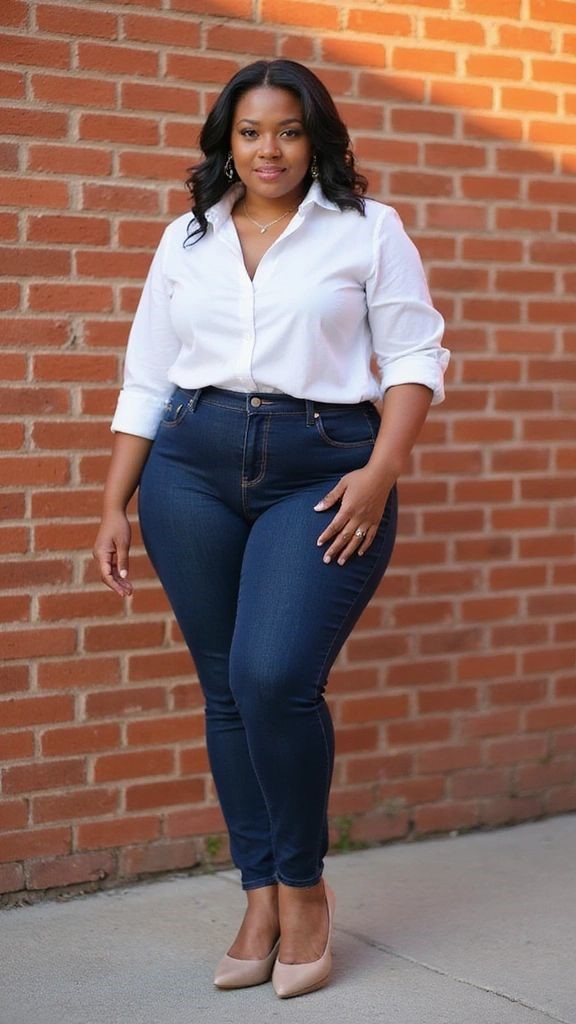
Final Thoughts on Finding the Right Jeans
Finding the right jeans can take a little trial and error, especially when your waist, hips, and thighs don’t fit the standard shape most jeans are made for.
But that doesn’t mean you have to settle for jeans that pinch, slide down, gap at the back, or leave you uncomfortable by the end of the day.
Start with what you already know about your body. Fuller thighs may need a cut with more room, while a smaller waist and fuller hips can make curvy-fit styles a better choice.
For anyone who hates feeling restricted, paying attention to the fabric and choosing a little stretch can make a big difference.
And don’t get too caught up in the number on the tag. A size 14 in one brand may fit very differently from a size 14 somewhere else. Try different cuts and sizes until something feels right.
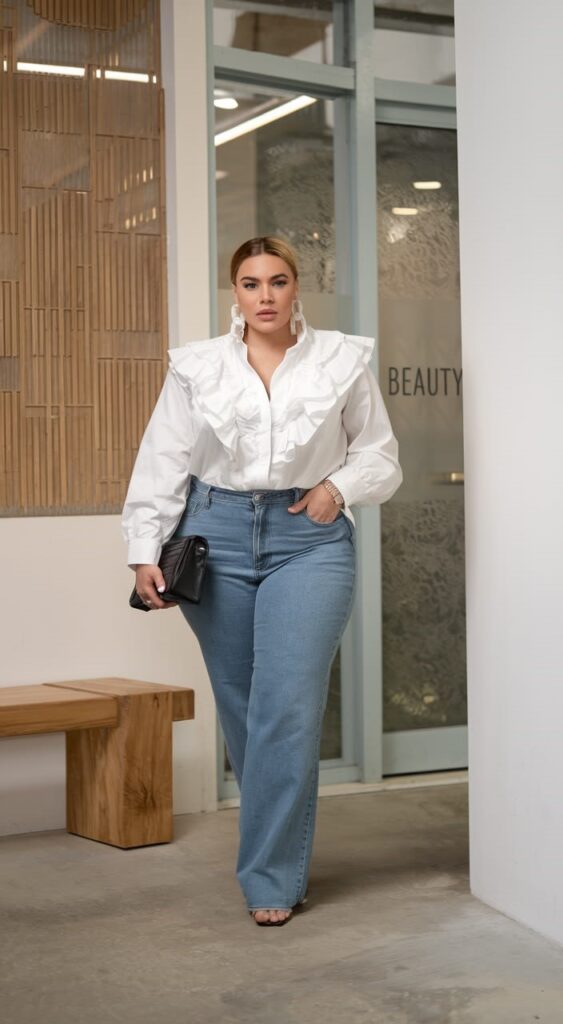
Most importantly, don’t buy jeans just because they look good while you’re standing in front of the mirror. Sit down, walk around, bend over, check the waistband, and look at the back.
These small tests can save you from spending money on a pair that ends up sitting unworn in your closet.
The best jeans for curvy women aren’t necessarily the ones everyone else is wearing.
They’re the ones that fit your body, suit your personal style, and feel comfortable enough to wear without constantly adjusting them.
And if you’re looking for more ways to make your clothes work harder for you, The Ultimate Plus Size Capsule Wardrobe is a great next read.