How to Find Jeans That Actually Fit
Disclosure: Some of the links in this post are affiliate links. This means if you click on the link and purchase an item, I will receive an affiliate commission at no extra cost to you.
Jeans can fit perfectly in one area and completely wrong in another. That is why finding the right pair takes more than knowing your usual size.
Maybe the waistband closes comfortably, but the denim pulls across your hips. Perhaps the hips and thighs fit well, yet you notice a gap at the back of the waist. You might even find a pair that looks great while standing and becomes uncomfortable the moment you sit down.
Those problems don’t always mean you need a different size.
They can point to differences in the rise, waistband construction, hip and thigh measurements, leg shape, or fabric composition. Denim brands also use different sizing standards. A size that works for you in one brand may fit differently in another.
That is why I wouldn’t start with the question, “What size jeans do I wear?”
I’d start with, “Where does this pair fit well, and where does it stop fitting well?”
That question gives you something useful to work with.
Start With Where the Fit Goes Wrong
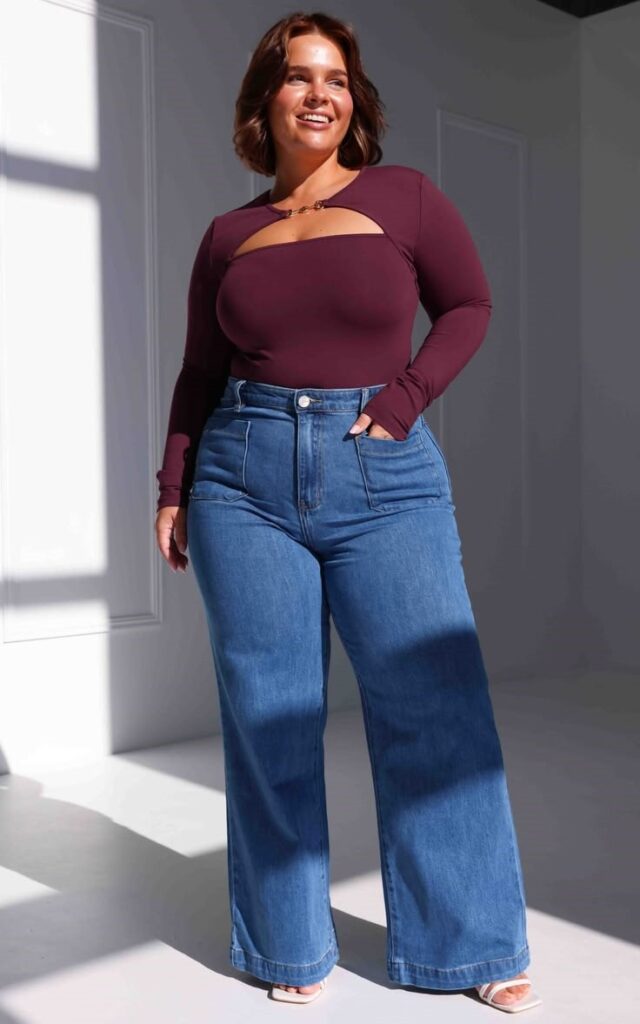
The waist may fit while the hips feel restricted. In that case, try a different cut before going up a size.
A gap at the waistband can point to the need for a more contoured waist or a curvy fit. Jeans that feel fine while standing may become restrictive when you sit. The rise or overall fit may not give you enough room.
Fabric matters too. Denim with a little stretch can provide more flexibility. Rigid denim tends to hold its shape more firmly.
Neither option is automatically better. What matters is how the fabric behaves on your body and whether the jeans remain comfortable as you move.
The goal isn’t to find jeans that merely button.
Look for a pair that sits properly at the waist and gives your hips and thighs enough room. The jeans should also feel comfortable when you sit, walk, and move.
Just as importantly, they should create the shape you want from your outfit.
Once you know what to check, you’ll walk into the fitting room with a much better idea of what works. You can also stop treating every bad fit as a sizing problem.
Here’s what to check first.
Know Your Measurements Before You Shop
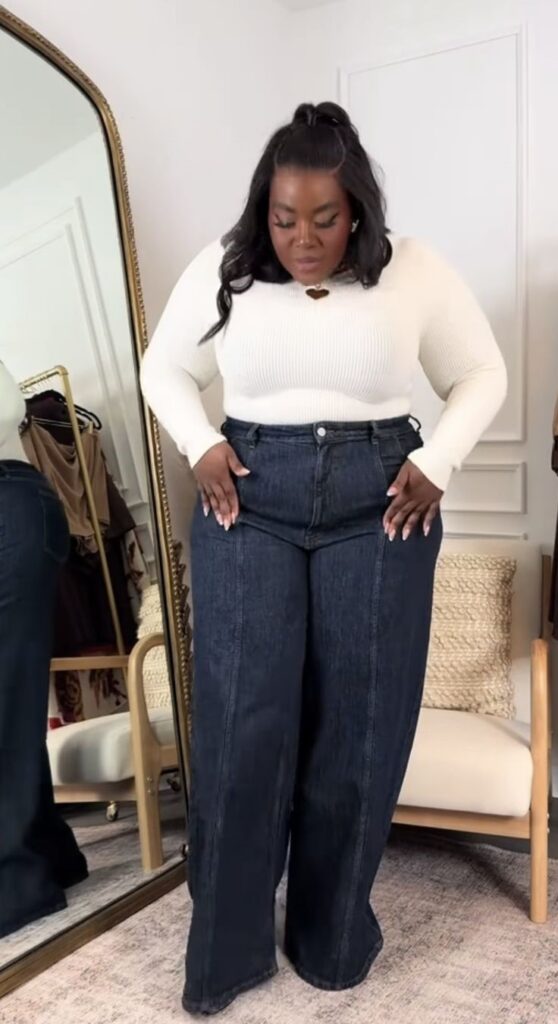
Your usual size is a useful starting point, but your measurements give you a much clearer idea of what you’re buying.
For jeans, three measurements are particularly helpful: your waist, hips, and inseam. Some brands also provide thigh measurements, which can be useful if you often find jeans tight through the upper leg.
Your waist measurement tells you how the waistband is likely to sit. Your hip measurement helps you judge whether you’ll have enough room through the fullest part of your lower body.
The inseam is simply the length of the inside of your leg, measured from the crotch down to where you want your jeans to end.
This measurement becomes especially useful when you’re choosing between regular, tall, cropped, or full-length styles.
You don’t need to measure yourself every time you shop. Keep your measurements somewhere on your phone and check them against the brand’s size chart before ordering.
This matters even more when shopping online. A product page may call something a size 18, but the actual measurements can vary between brands and styles.
Never assume that your usual size will fit simply because the label matches.
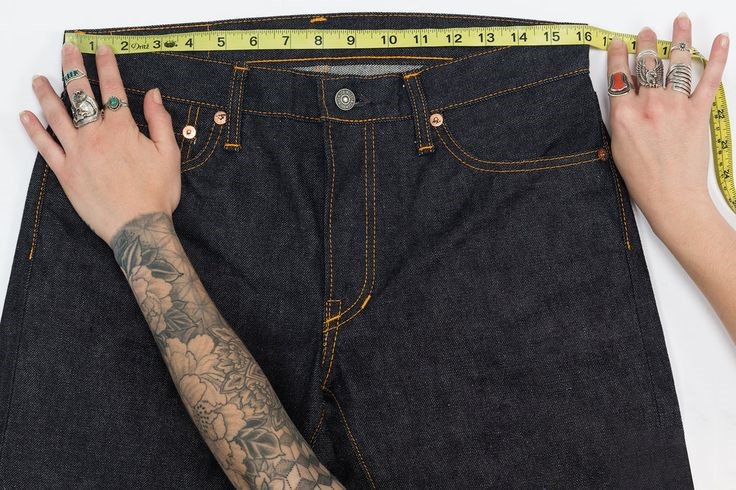
There is another useful trick if you already own a pair of jeans that fits exceptionally well.
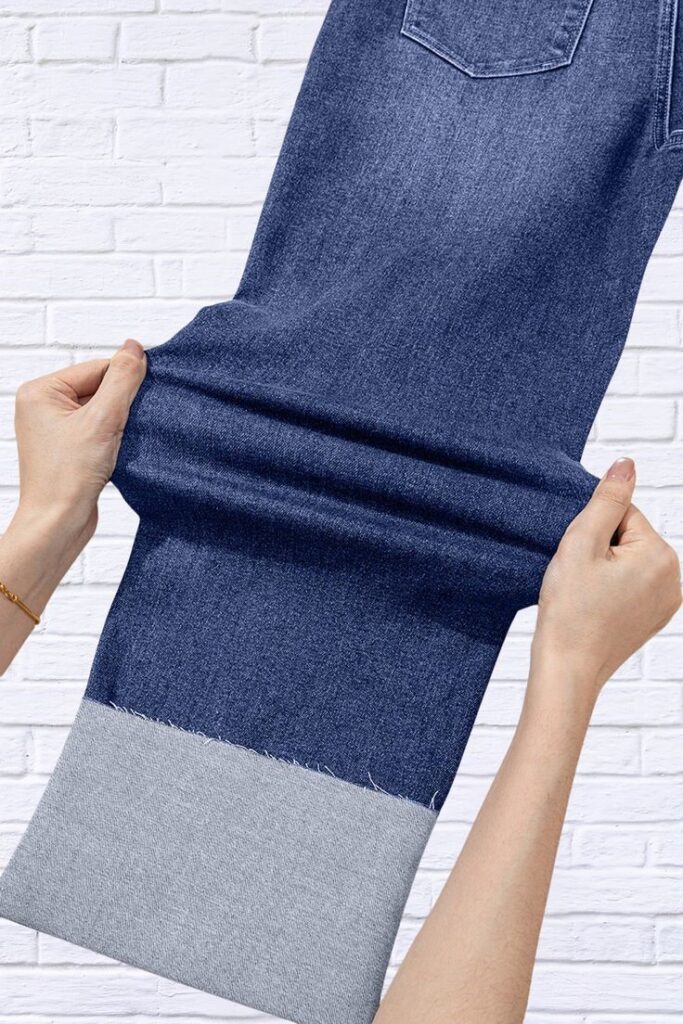
Lay them flat and measure the waistband, rise, and inseam. Then compare those measurements with the pair you’re considering. You now have a real reference point instead of relying entirely on a generic size chart.
For more help choosing denim, The Best Plus Size Jeans You Can Buy Online is worth checking when you’re ready to compare different styles and retailers.
Check the Rise, Not Just the Waist
Two pairs of jeans can have similar waist measurements and still feel completely different because they have different rises.
The rise is the distance from the crotch seam to the top of the waistband. It determines where the jeans sit on your body and how much coverage you get through your stomach and hips.
High-rise jeans sit higher on the waist and can feel more secure. Mid-rise styles sit lower and may feel less restrictive. Low-rise jeans sit closer to the hips and create a different proportion through the outfit.
There isn’t one rise that works for everyone. The better choice is the one that stays comfortably in place and feels natural when you move.
Pay particular attention when you sit down. A rise that feels fine while standing can pull uncomfortably once your body bends.
If your jeans keep sliding down at the back or feel unusually short through the crotch, don’t immediately assume you need a different size. Try another rise first.
You may find that changing the rise solves a problem that sizing never could.
Once you’ve found a rise you like, you can experiment with different leg shapes without having to rethink the entire fit. If you want to try something roomier, Wide-Leg Jeans Outfit Ideas can give you some styling inspiration.
For a cleaner, more streamlined shape, Straight-Leg Jeans Outfit Ideas are another option worth exploring.
Check the Waistband Carefully
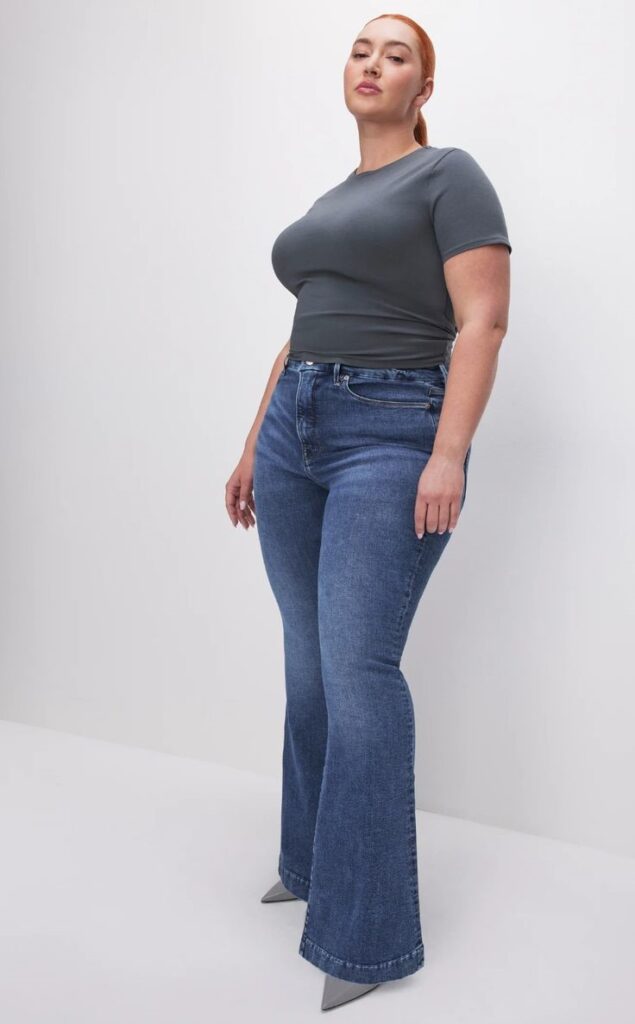
The waistband can tell you a lot about a pair of jeans before you even start looking at the legs.
Button or zip the jeans and stand naturally. The waistband should sit securely without digging into your stomach or leaving enough space for the jeans to slide down.
Then try sitting down.
A waistband that feels fine while standing can become uncomfortably tight once you sit. This is particularly noticeable with rigid denim, which has less give than stretch denim.
Watch for another common problem: the back gap.
If the jeans fit well around your hips but leave a noticeable space between your lower back and the waistband, the jeans may not have the right shape for your proportions.
Going down a size might close the gap, but it could also make the hips and thighs too tight.
A contoured waistband or curvy cut can often make more sense.
Also pay attention to how the waistband sits across your stomach. You don’t want it rolling over every time you sit, nor should you have to keep adjusting it throughout the day.
A belt can help with slightly loose jeans, but it shouldn’t have to compensate for a poor fit. If you need to tighten a belt so much that it bunches the waistband, the jeans probably aren’t giving you the right fit in the first place.
If you’re unsure whether the problem is your clothing size or the way a garment is cut, You’re Probably Wearing the Wrong Size (Here’s How to Tell) is a useful guide to keep in mind.
Make Sure Your Hips and Thighs Have Enough Room
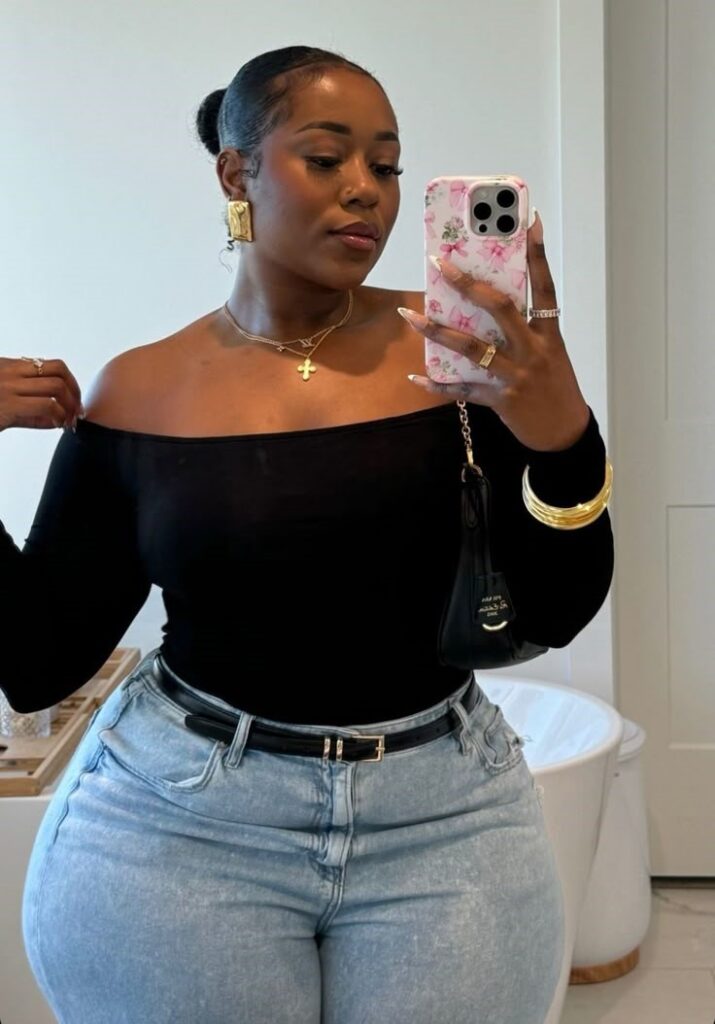
A pair of jeans can look perfectly fine from the front and still be too tight through the hips and thighs.
Look at the fabric rather than just the mirror.
Strong horizontal lines across the hips can indicate that the denim is under too much tension. Pockets that pull open are another obvious clue. You may also notice that the fabric feels restrictive when you walk or sit.
Don’t automatically solve this by going up a size.
A larger size may give your hips more room, but it can also leave the waist loose. Try a different cut first. Curvy fits, relaxed legs, straight legs, and wide-leg styles can offer more room without making the entire pair oversized.
Your jeans should follow your shape without squeezing it.
Movement is the real test here. Walk around the fitting room. Sit down. Stand up again. Bend your knees.
If you’re already uncomfortable after a few minutes, you probably won’t enjoy wearing the jeans for several hours.
For more ideas on creating a balanced look with different proportions, 25 Outfit Tricks That Create a More Balanced Silhouette is worth exploring. It can also help you see how changing the shape of one garment can affect the whole outfit.
Check the Leg Shape
Once the waist, hips, and rise feel right, look at the legs.
The leg shape changes both the fit and the overall appearance of your outfit.
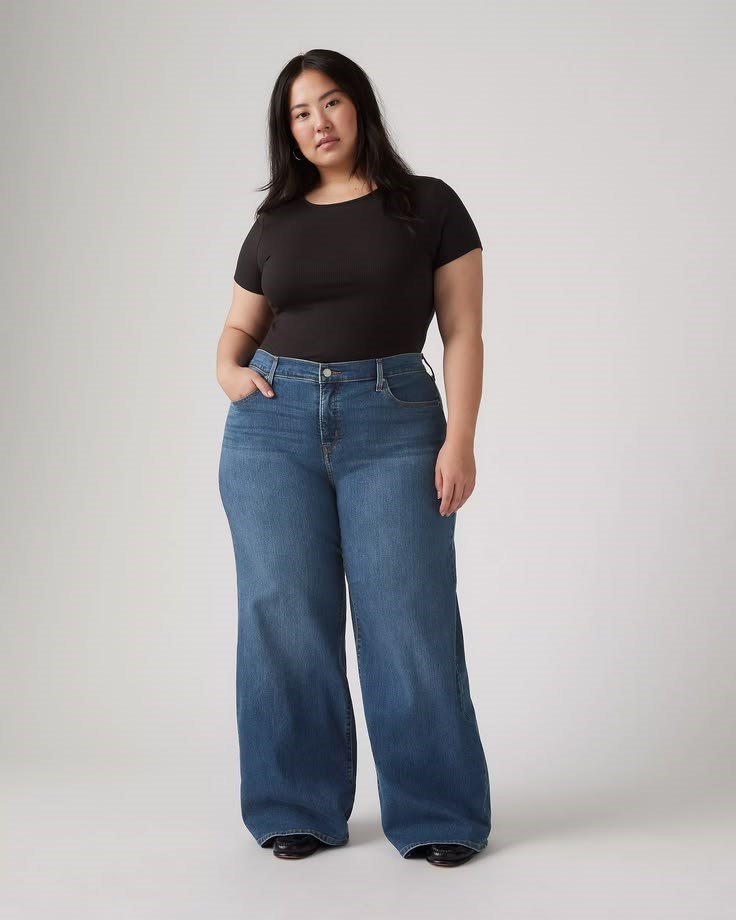
Skinny jeans stay close to the leg from the thigh down. Straight-leg jeans keep a more consistent width through the leg.
Bootcut styles become slightly wider toward the hem, while wide-leg jeans give you considerably more room from the thigh or hip downward.
Don’t choose a leg shape simply because it is currently popular.
Think about how you want your jeans to feel and what you normally wear with them. A wider leg can feel much easier to move in, while a straight leg can give you a cleaner everyday shape.
If you like a more relaxed silhouette, think about how the wider leg will work with the rest of your wardrobe. The Ultimate Plus Size Capsule Wardrobe is a useful guide for choosing versatile pieces that can work with different jeans and outfits.
The important thing is to make sure the leg shape works with the rest of the fit. There’s no point finding jeans with a perfect waistband if you dislike how the legs feel or fall.
Don’t Ignore the Fabric
The fabric can completely change how a pair of jeans fits.
Stretch denim usually gives you more flexibility. That can make a big difference around the waist, hips, and thighs, especially when you’re sitting or moving throughout the day.
Rigid denim behaves differently. It tends to feel firmer and hold its shape more closely, but it may also feel less forgiving when the fit is slightly off.
Check the fabric composition before buying, especially online. A pair with a small amount of elastane or spandex will usually have more give than a pair made almost entirely from cotton.
More stretch isn’t automatically better, though.
Very stretchy jeans can feel fantastic when you first put them on and then loosen with wear. A pair that feels slightly snug but comfortable may settle into a better fit, while jeans that already feel loose may become baggy after a few hours.
Think about how you want the denim to behave, not just how it feels for the first five minutes.
If you want to build more outfits around your denim once you’ve found the right pair, How to Style Black Jeans 25 Different Ways is a good place to find ideas beyond the usual jeans-and-T-shirt combination.
Know When to Size Up
Sizing up makes sense when the jeans feel tight in several areas and the fabric has little room to give.
Look for signs such as a waistband that digs in, pockets that pull open, strong tension across the hips, or thighs that feel restrictive even when you’re standing.
Don’t use the “I’ll just lose a little weight” argument to justify an uncomfortable pair either.
Buy for the body you have now.
Clothes should fit your current body comfortably. You can always adjust your wardrobe later if your measurements change.
Know When Sizing Up Won’t Fix the Problem
Sometimes the jeans are not too small. They’re simply the wrong shape.
A larger size won’t necessarily fix a waistband gap. It may make the waist even looser while giving you extra room everywhere else.
The same thing can happen with jeans that fit your waist but feel tight around your thighs. Going up a size may create a new problem instead of solving the original one.
That is when you should start looking at different cuts, rises, or fits.
For example, a curvy fit can provide more room through the hips while keeping the waist closer to the body. A relaxed or wide-leg cut can give your thighs more breathing room without requiring a larger waist.
Learning this distinction can save you from trying on the same style in four different sizes.
And if you’ve ever bought jeans that technically fit but somehow made your whole outfit feel heavier or less balanced, it may be worth reading Jeans Mistakes That Make Outfits Look Frumpy before your next denim shopping trip.
Shopping Online? Don’t Trust the Product Photo Alone
Buying jeans online can be convenient, but the screen leaves out a lot of information.
You can see the colour, shape, and styling. You can’t feel the denim or see exactly where it will sit on your body.
That doesn’t mean online shopping has to be a guessing game. You just need to treat the product page as more than a collection of pretty photos.
Look Beyond the Main Photo
Scroll through every image before deciding.
A front view tells you very little on its own. Check for side and back views as well. Look at how the jeans fall around the waist, hips, legs, and ankles.
Pay attention to the shoes in the photos too. A pair styled with heels may look much longer than it would with sneakers or flats.
The styling can also make a difference. A model might wear a loose shirt over the waistband or a jacket that hides part of the jeans. That can make it harder to judge the actual shape of the garment.
Take a few minutes to look at the jeans themselves rather than the entire outfit.
Read the Details Under the Photos
The product description often contains information that the pictures don’t show.
Look for the rise, leg style, fabric composition, available lengths, and care instructions. These details can tell you much more about what you’re actually buying.
Pay attention to phrases such as “structured denim,” “comfort stretch,” “relaxed fit,” or “full length.” They give you clues about how the jeans are designed to feel and wear.
If you regularly shop online, it helps to have a few trusted retailers rather than starting from scratch every time. 25 Online Stores Every Plus Size Woman Should Bookmark is useful for building that shortlist.
Use Reviews to Find the Information the Brand Left Out
Product descriptions tend to show the jeans in the best possible light.
Customer reviews are where you often find the less polished details.
Look for comments about how the jeans feel after several hours, whether they change after washing, whether the colour transfers, or whether the material feels thinner or heavier than expected.
Pay attention to patterns rather than one person’s experience.
One shopper saying the jeans felt tight may not tell you much. Several people mentioning the same issue deserves your attention.
Reviews can also tell you whether shoppers found the product description accurate. That can help you decide how much trust to place in the brand’s measurements and fit notes.
Compare Before You Click Buy
Finding one pair you like doesn’t mean you have to buy it immediately.
Search for similar styles from a few retailers. Compare their prices, materials, size ranges, return policies, and customer feedback.
You may find a very similar pair for less money, or discover that another retailer offers more length options.
This is where having a clear shopping process helps. The Ultimate Plus Size Shopping Guide can help you become more intentional about what you buy instead of adding something to your cart simply because it looks good in a photo.
Don’t Let a Discount Rush You
A countdown timer, limited-time sale, or “only a few left” message can make you feel like you need to decide immediately.
You don’t.
Take another look at the measurements. Check the return policy. Read a few more reviews. Then decide.
A discounted pair that sits unworn in your wardrobe isn’t a bargain.
The same applies when you’re shopping for something trendy. Before buying, ask yourself whether you’ll actually wear the jeans with the clothes and shoes you already own.
Where to Buy Trendy Plus Size Clothes can be useful when you want current styles without letting trends completely dictate your purchases.
Online shopping works best when you slow down enough to gather the information the product photo can’t give you.
Think About How You Actually Wear Them
Here’s why so many of us get jeans shopping wrong and end up wasting money without meaning to: we focus so much on whether the jeans fit that we forget to ask whether they’ll actually work for our everyday lives.
A pair can fit beautifully and still spend most of its time hanging in your wardrobe.
Maybe the denim feels too stiff for the hours you spend sitting at work. Perhaps the length only works with one pair of shoes. You might love the colour but realise that most of your tops don’t work with it.
A good fit matters, but it isn’t the only thing worth checking before you pay.
Think about where you’ll wear the jeans, what you’ll wear with them, and whether they suit the way you normally move through your day. That quick check can save you from buying another pair that looks good in the fitting room but rarely leaves your wardrobe.
Choose Jeans That Match Your Routine
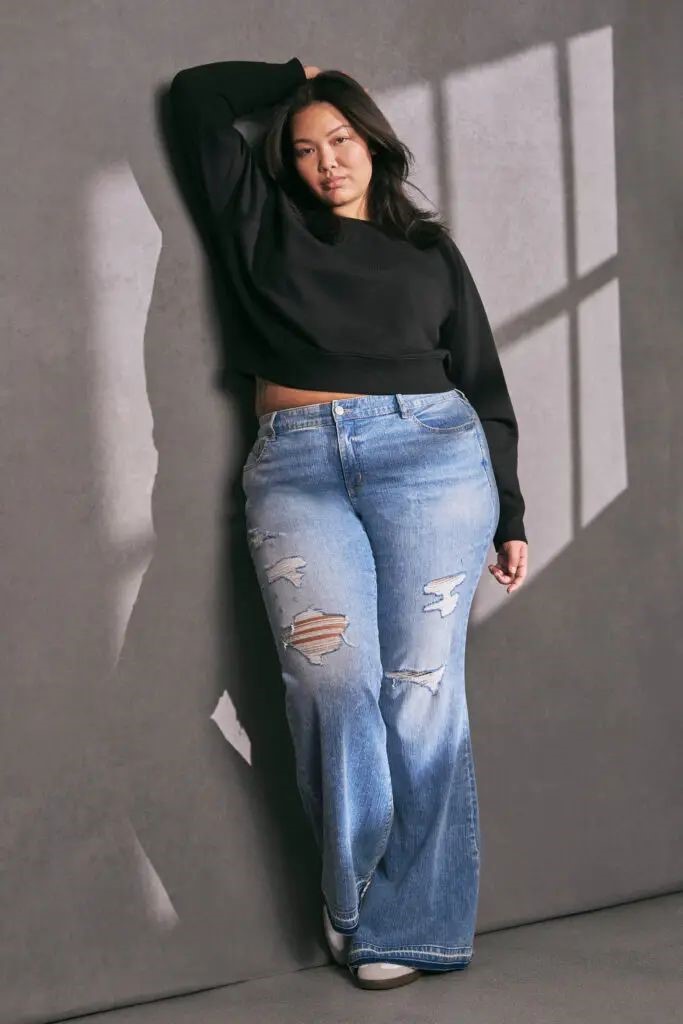
Your day-to-day life should have a say in the jeans you buy.
Someone who spends hours at a desk may want denim that feels comfortable when sitting. If you’re constantly moving around, you may care more about flexibility and how well the jeans keep their shape.
Think about what you already reach for.
If you prefer soft, easy clothing, a very rigid pair may frustrate you. If you like structured outfits, extremely soft denim may not give you the look you want.
There isn’t one perfect type of denim for everyone. The better choice is the pair that fits both your body and your routine.
For ideas on making denim work in a more polished wardrobe, 25 Stylish Plus Size Work Outfits has plenty of outfit combinations worth exploring.
Think About the Shoes You Already Own
A pair of jeans shouldn’t require you to buy a whole new collection of shoes.
Before choosing the length and leg shape, think about the shoes you wear most often.
Full-length wide-leg jeans may work beautifully with platforms but drag on the ground with flats. Cropped styles can look great with trainers but may not work as well with the boots you wear most.
You don’t need to make every pair work with everything.
Just make sure the jeans work with enough of your existing wardrobe to earn their place in it.
Be Honest About Where You’ll Wear Them
Shopping can make us imagine a version of our lives that doesn’t quite exist.
You see a pair of white jeans and picture yourself wearing them on sunny weekends. A dramatic pair of wide-leg jeans suddenly makes you imagine dressing up more often. A trendy style looks exciting because you’ve seen it everywhere.
Then you get home and realise you don’t actually have many occasions for them.
Before buying, think of three real situations where you would wear the jeans. They could be work, running errands, dinner, weekends, or anything else that is actually part of your routine.
If you struggle to think of those outfits, that may be a sign to leave them behind.
For more ways to get more use from the clothes you already own, 30 Pieces That Can Create 100 Outfits is a helpful place to start.
Check the Care Instructions
How much effort are you willing to put into looking after your jeans?
Some denim needs more careful washing to protect the colour and shape. Others are easier to include in your regular laundry.
Check the care instructions before buying, especially when you’re spending more than usual.
There’s no point buying beautiful jeans that become a hassle every time they need washing.
Your clothes should fit into your routine, not create another one.
Don’t Buy Every Style Just Because You Can
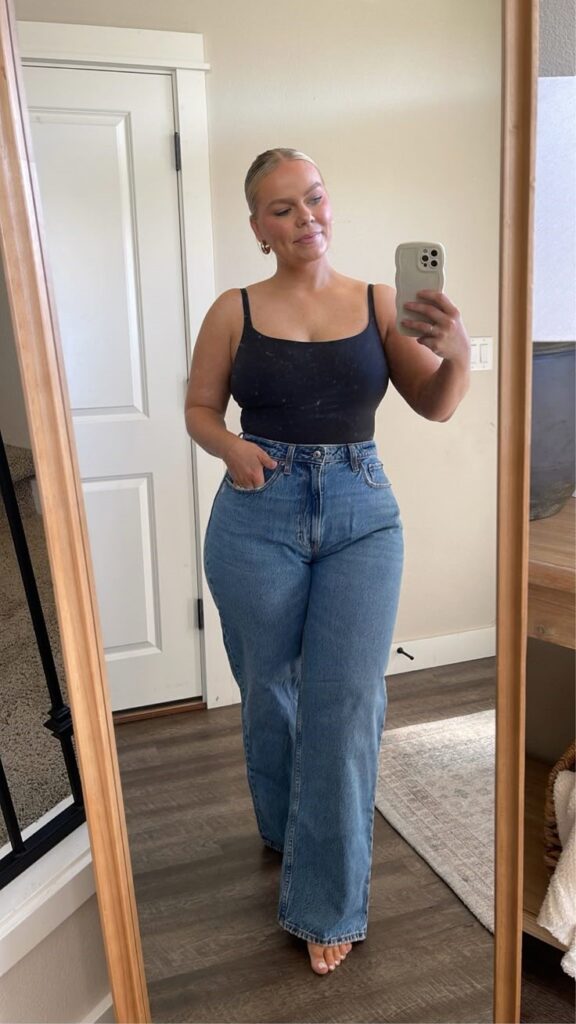
You don’t need every denim trend in your wardrobe.
Start with the cuts you know you’ll wear. Once you have a few reliable pairs, you can experiment with something different when you actually want a new silhouette.
That approach can also help you shop with more intention. Instead of buying several pairs that serve almost the same purpose, you can spend your money on pieces that add something useful to your wardrobe.
If you’re trying to create a closet that feels easier to manage, How to Build a Closet You’ll Actually Wear is a useful next step.
The best jeans aren’t just the ones that fit when you try them on. They’re the ones you keep reaching for after the novelty of the purchase has worn off.
A Better Way to Shop for Jeans
The next time you shop for jeans, don’t walk in thinking you need to find the size that you always buy.
Go in knowing what you want the jeans to do.
Maybe you need a pair that won’t dig in during a long day. Perhaps you want something that works with the shoes you already wear.
You may be looking for denim that keeps its shape, feels soft enough for everyday wear, or gives you a little more room where you need it.
Those details are more useful than a number on a label.
They also make it easier to walk away from a pair that looks tempting but doesn’t quite make sense for you. Not every pair deserves a place in your wardrobe simply because it fits well enough or happens to be on sale.
When you find denim that ticks the important boxes, pay attention to it. Remember the cut, rise, fabric, and brand.
Those details give you a starting point the next time you’re shopping, instead of making you figure everything out again.
And don’t underestimate what happens when the rest of your outfit works with the jeans. The right top, jacket, shoes, or accessories can completely change how a pair looks.
If you want more ideas for making everyday outfits look intentional, How to Look Polished Every Day is a natural place to continue.
Good jeans don’t need to be complicated.
They simply need to make sense for you, your wardrobe, and the way you actually live.


One Comment