The Styling Mistake That’s Making Your Outfits Look Boxy
Disclosure: Some of the links in this post are affiliate links. This means if you click on the link and purchase an item, I will receive an affiliate commission at no extra cost to you.
Here’s what no one will tell you: an outfit can have all the right pieces and still somehow look wrong together. Sometimes, you don’t need to change the clothes, you need to change the relationship between them.
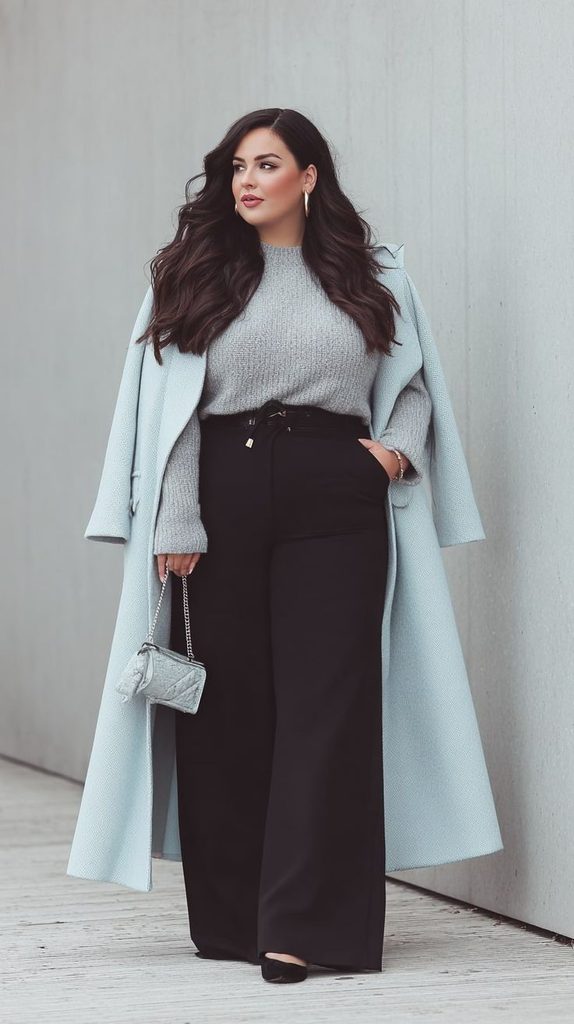
Think about a loose blouse falling over wide-leg trousers, then add a long cardigan or an oversized jacket on top.
Nothing is technically wrong with any of those pieces. In fact, they may all be great pieces on their own. But when there’s no clear change in volume, length, or structure, the eye reads the entire outfit as one large shape.
This is why an outfit can fit perfectly and still look wider or less defined than you expected.
And it’s not simply a matter of wearing “fitted” clothes. That advice misses the point. You can wear loose, relaxed, oversized, or wide-leg pieces and still have a beautifully defined silhouette. The difference is how you balance them.
Where your top finishes matters. Where your waistband sits matters. The length of your jacket matters. So does the amount of fabric around your shoulders, hips, and legs. Even something as simple as leaving a shirt untucked can change the proportions of an otherwise great outfit.
The tricky part is that these aren’t always obvious mistakes. You can be wearing clothes that fit your size, suit your style, and feel comfortable and still accidentally create a straight, uninterrupted silhouette.
So before you decide that a particular outfit “just doesn’t suit you,” look at the proportions.
In this guide, we’re breaking down the styling choices that can make an outfit look boxy and the small adjustments that bring back definition without forcing you into clothes that don’t feel like you.
Because the goal isn’t to make your body look smaller.
It’s to make your outfit look intentional.
The Styling Mistakes That Can Make an Outfit Look Boxy
Most of these mistakes are easy to miss because the individual pieces often look perfectly fine. The problem shows up when you put them together and the proportions don’t quite work.
A top can be the right size. Your trousers can fit beautifully. Your jacket can be one of your favorites. But if the lengths, volume, and structure aren’t giving each other enough contrast, the whole outfit can start to look wider and less defined.
The good thing is that you usually don’t need to replace the clothes. A small change in how you pair, tuck, layer, or finish them can completely change the way the outfit comes together.
Here are the styling mistakes worth looking out for.
Wearing Too Much Volume at Once
This is one of the easiest ways to lose definition in an outfit without actually wearing anything that looks wrong.
A loose blouse, wide-leg trousers, and an oversized jacket can all be great pieces. But when you wear them together, you’re placing a lot of fabric around your body at the same time. Without something to break it up, the outfit can start to look like one large shape instead of a series of pieces.
The trick is not to make everything fitted. It’s to give the eye somewhere to pause.
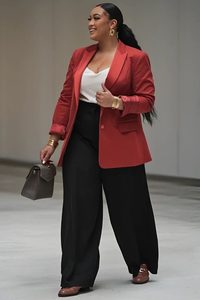
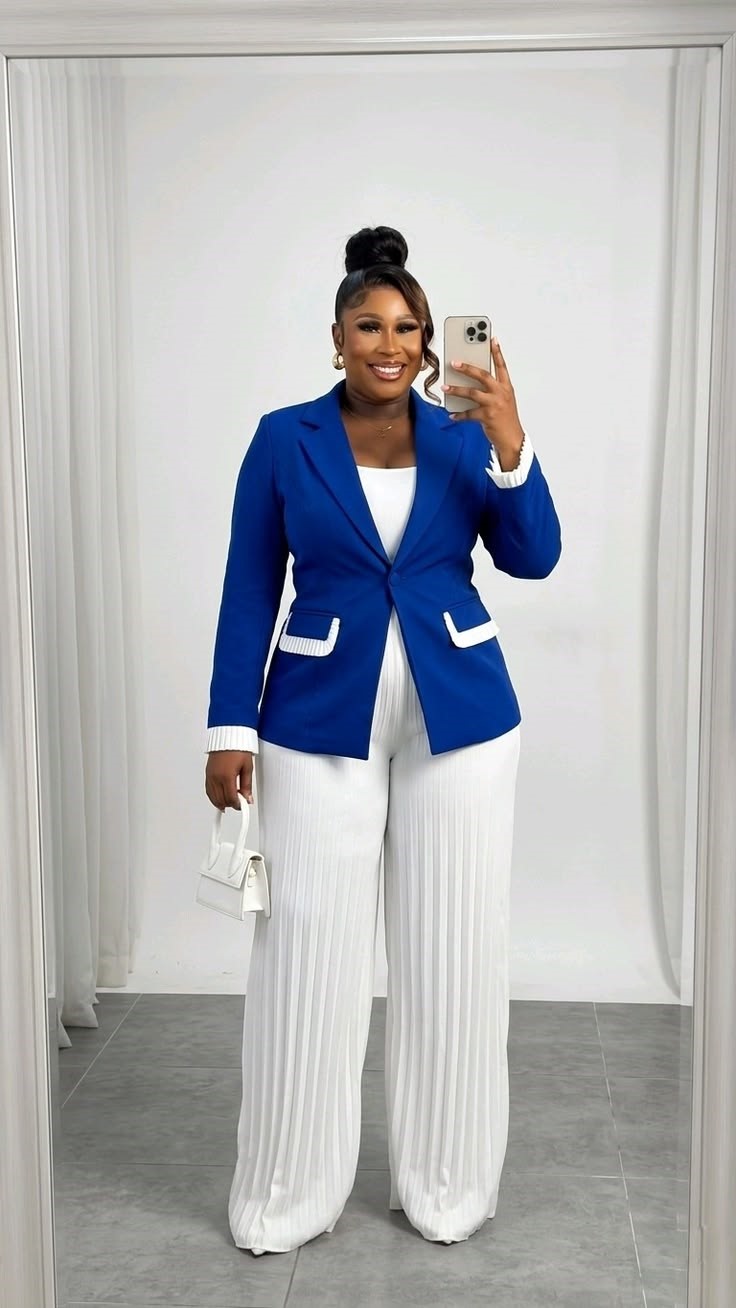
For example, if you’re wearing wide-leg trousers, try pairing them with a top that has a little more structure or one that finishes closer to your waist.
If you want to wear a loose top, you could keep the bottom half cleaner and more streamlined. And if an oversized jacket is the star of the outfit, you don’t necessarily need another very loose layer underneath it.
Even a small adjustment can help. A partial tuck, or a visible waistband can create enough contrast to bring some shape back into the outfit.
Think of it as giving your outfit a little breathing room. You can still have the comfort and movement of relaxed clothes without letting every piece compete for the same amount of space.
If you love relaxed silhouettes, 10 Styling Tricks Every Plus Size Woman Should Know has more practical ways to create definition without making your clothes feel restrictive.
When Your Top and Bottom Have the Same Amount of Volume
Sometimes the problem is not that you’re wearing too much fabric overall. It’s that the volume is sitting in the same places.
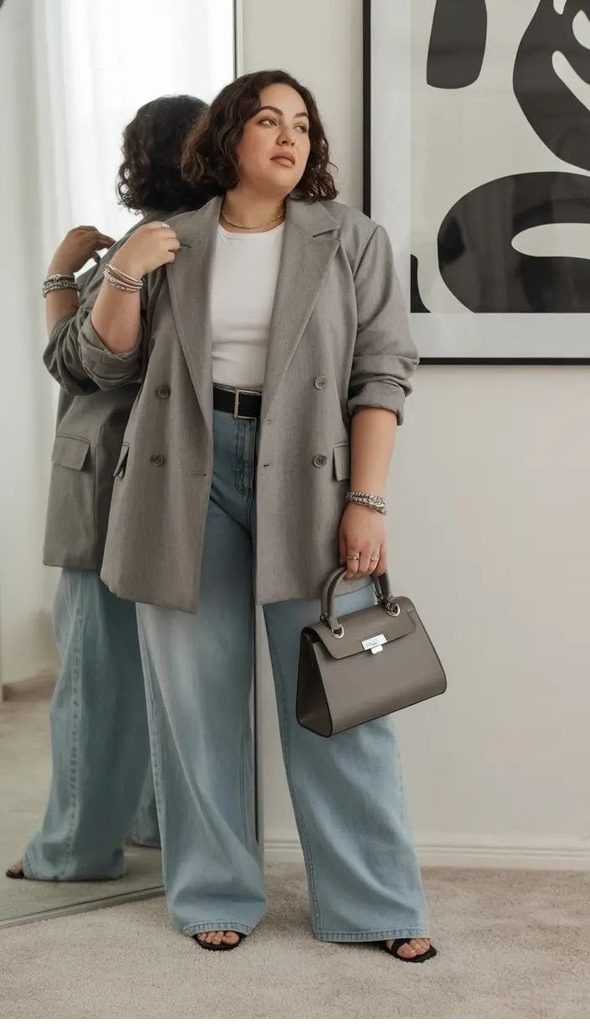
A loose top with wide-leg trousers is a good example. Both pieces create width, and if the top also falls well past your waist or over the widest part of your hips, there may be very little visual definition between them.
This can make your torso and lower half blend together instead of giving the outfit a clear shape.
You don’t have to give up either piece. Try changing the relationship between them. A half-tuck can expose part of your waistband.
A shorter top can create a natural break between your upper and lower half. You could also keep the wide-leg trousers and choose a top with a more defined neckline, shoulder line, or waist.
The same idea works in reverse. If you want to wear a very loose, flowing top, try giving your bottom half a little more structure. Straight-leg jeans, tailored trousers, or a cleaner skirt can give the outfit somewhere to settle.
The goal is simple: don’t let the same amount of volume continue uninterrupted from your shoulders to your ankles.
That small break is often what makes a relaxed outfit look styled rather than shapeless.
If you’re looking for more everyday combinations that use this kind of balance, 25 Casual Plus Size Outfit Ideas You’ll Want to Wear Every Day should be your next read.
Your Top Ends at the Wrong Place
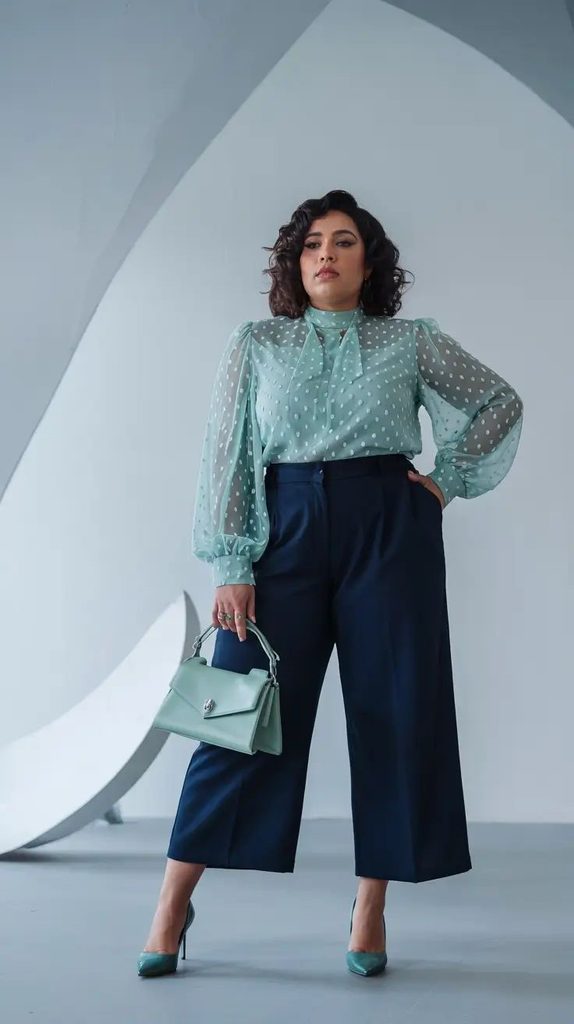
The length of your top can change the whole shape of an outfit, even when the top itself fits perfectly.
A common problem is a loose or straight-cut top that ends right around the widest part of your hips.
Because the hem creates a horizontal line there, it can make that area look wider while also hiding any definition between your top and bottom.
This doesn’t mean you need to avoid longer tops. The important thing is where they finish and what you’re wearing underneath them.
Try a top that ends slightly above or below the widest part of your hips. You can also create a little more shape by doing a front tuck, tying the shirt at the waist, or wearing it open over a more fitted layer.
And don’t forget about cropped tops. A shorter top doesn’t have to mean showing your stomach. A cropped sweater or jacket that meets the waistband of high-rise trousers can simply create a cleaner break between your upper and lower half.
It’s a small detail, but it can completely change the proportions of an outfit.
If you’re working on getting your overall proportions right, The Ultimate Plus Size Outfit Guide for Every Body Shape can give you more ideas for choosing silhouettes that work together.
Your Jacket or Cardigan Is Creating One Long Block
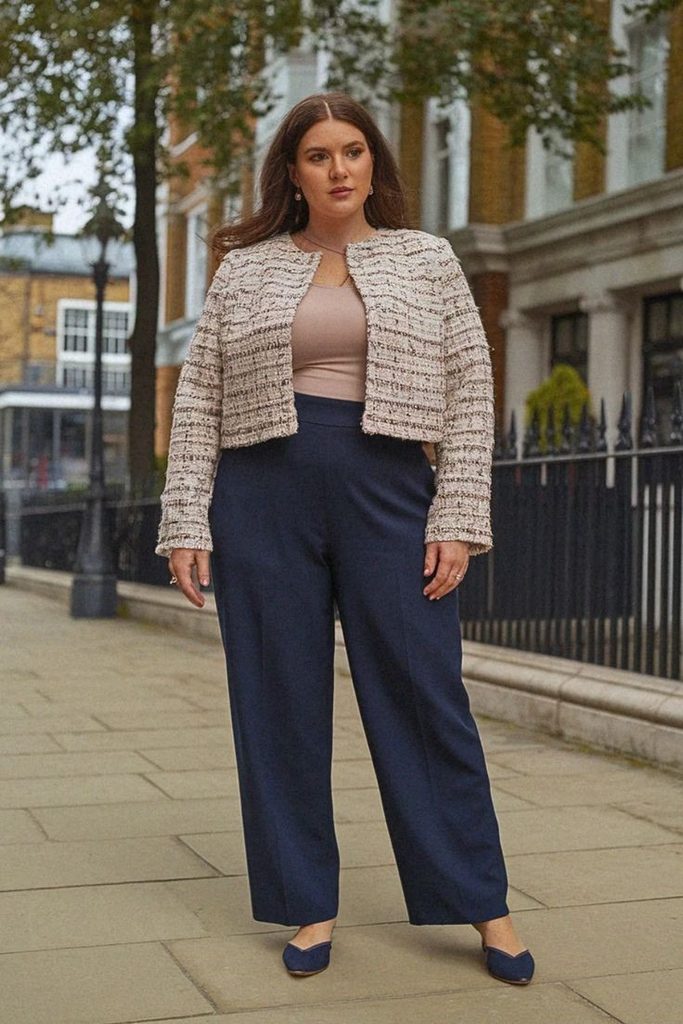
Long layers can make an outfit look incredibly polished, but they can also make everything underneath disappear.
A long cardigan, duster, or oversized jacket worn open creates two strong vertical lines down the body.
That can be a great effect, but if the layer is also loose, straight, and the same visual weight as everything underneath, it can make the entire outfit feel like one long block of fabric.
Pay attention to where the layer ends. If it finishes at the widest part of your hips or thighs, it can draw attention to that exact point.
A slightly shorter layer may create a cleaner proportion, while a longer one can work beautifully when the pieces underneath have enough definition.
The front of the layer matters too. An open jacket that allows your top and waistband to show can create more visual breaks than a fully closed, oversized layer.
You don’t have to stop wearing long cardigans or jackets. Just give the layer a supporting role instead of letting it cover the entire outfit.
For example, try a long open cardigan over a tucked-in top and straight-leg trousers. The cardigan still gives you that relaxed, flowing look, but the outfit underneath provides enough structure to keep everything from blending together.
And if you love layering, Winter Layering Ideas for Plus Size Women is a useful read for putting together layers without losing the shape of your outfit.
Ignoring the Waistline When Putting an Outfit Together
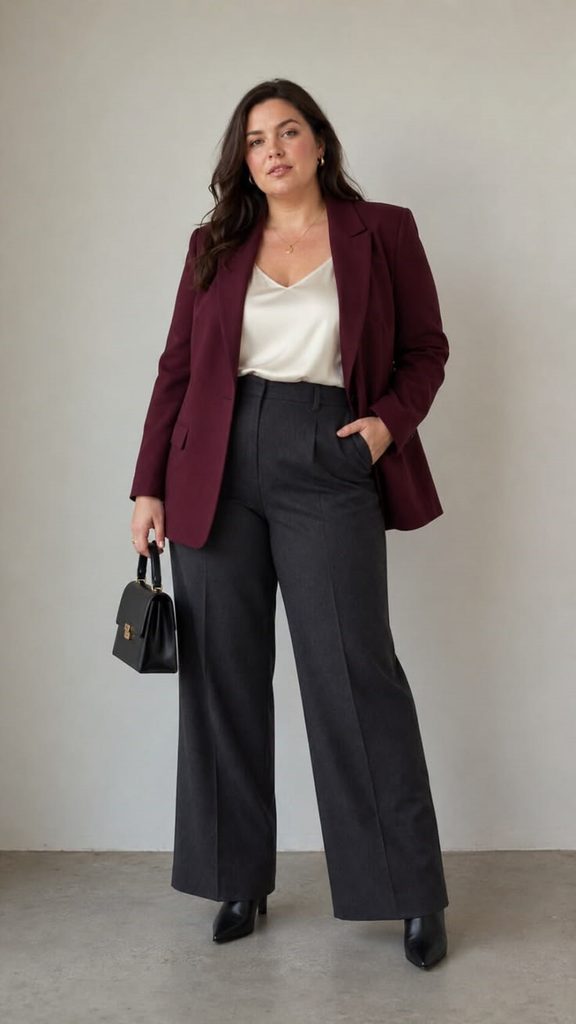
You don’t have to cinch your waist to create shape. But you do need to pay attention to where your waistline sits.
This is easy to overlook with longer tops and loose layers. It can also happen with mid- or low-rise bottoms. If your waistband disappears under your top, the outfit may lose an important visual break.
The result can be one long, continuous shape.
A simple tuck can change that. So can a shorter top or a cropped jacket. High-rise trousers can also help. Even leaving a few buttons open on a shirt can make a difference.
And you don’t have to tuck in your entire top. If you prefer a relaxed look, try a small front tuck. It shows where your waist sits while keeping the rest of the fabric loose.
The goal is not to make your waist look tiny. It’s simply to give your outfit a clear transition between the top and bottom.
This is also why understanding your proportions can make getting dressed easier. If you’re still figuring out which silhouettes work best for you, How to Dress for Your Body Shape can help you see how different lengths and shapes work together.
Choosing Stiff Fabrics That Stand Away From Your Body
Sometimes, the problem is not the cut of your clothes. It’s the fabric.
A stiff fabric can hold its shape instead of following the natural lines of your body. If the garment is already loose, that extra structure can make it stand farther away from you.
Think of a crisp, oversized shirt made from thick cotton. It may look great on the hanger. Once you put it on, though, the fabric can create extra width around your torso.
This doesn’t mean you should avoid structured fabrics. They can actually make an outfit look polished. The key is knowing where you want that structure.
A structured blazer can give your shoulders a clean shape. A stiff, oversized top can add unnecessary bulk through the middle. Those two pieces may have similar structure, but they create very different effects.
A quick fabric check
Before deciding whether a piece works, look at what the fabric does when you put it on.
- Does it fall naturally or stand away from your body?
- Does it add shape where you want it?
- Does it create extra bulk around your middle?
- Does it move when you move?
If the fabric creates width in an area where you already have a lot of volume, try pairing it with something softer.
For example, wear a structured blazer over a fluid top. Or pair a crisp shirt with trousers that have a cleaner, straighter shape.
You can also use fabric to create contrast. A soft, draping top can balance a more structured bottom. A tailored jacket can give shape to a relaxed outfit underneath.
If you’re interested in using color and texture to create more balance, The Best Colors for Plus Size Fashion is another useful guide to explore.
The fabric doesn’t have to cling to your body. It just shouldn’t create more width than you intended.
Wearing Layers That All End at the Same Point
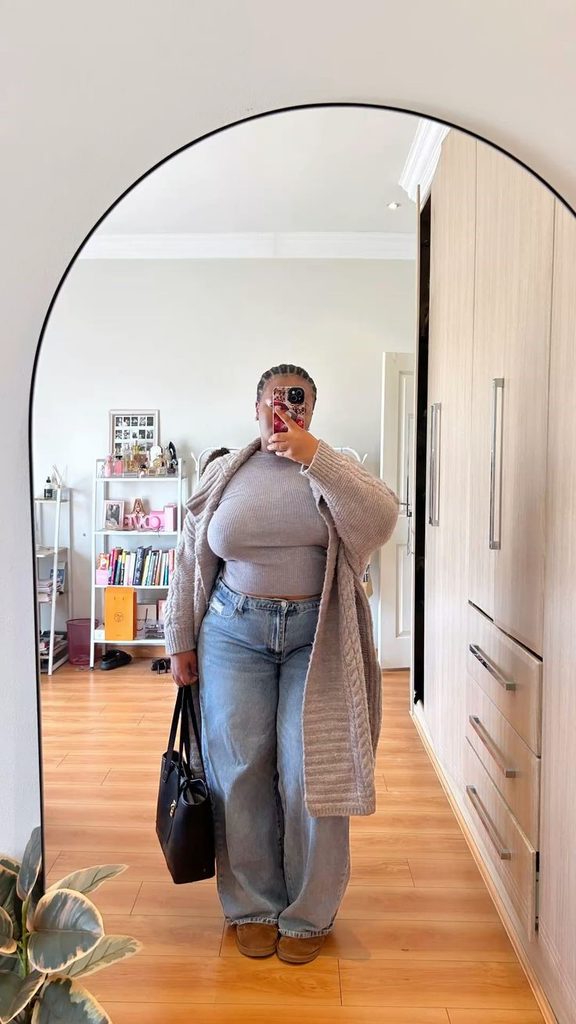
Layering can add a lot to an outfit. But when every layer ends at almost the same place, the result can look surprisingly flat.
Picture a top that ends at your hips, a cardigan that ends at your hips, and a jacket that hits the same spot. Instead of creating movement, all those horizontal lines stack on top of each other.
The eye notices that repeated line. It can make the middle of the outfit look wider and more crowded.
This is why the length of each layer matters.
Try mixing different lengths instead:
- A shorter top with a longer open cardigan.
- A tucked-in shirt under a jacket that ends at the hip.
- A cropped jacket over a longer top.
- A longer coat over a cleaner, shorter base layer.
You don’t need dramatic differences. Even a few inches between layers can create more movement.
Look at your outfit from the side
This is a simple trick that many people skip.
Stand sideways in front of a mirror and look at where each layer ends. If several pieces stop at the same point, try changing just one of them.
You might be surprised by how much difference that small adjustment makes.
The same idea applies to seasonal outfits. When you’re combining coats, sweaters, and trousers, pay attention to how each layer sits against the next. Winter Layering Ideas for Plus Size Women has more ideas for building layers while keeping the outfit balanced.
Good layering should make the outfit feel more interesting. It shouldn’t make every piece disappear into the next.
Carrying a Large Bag With an Already Oversized Outfit
Your bag can quietly change the balance of an outfit.
If you’re already wearing a loose top, wide-leg trousers, and a long jacket, adding a huge tote or oversized shoulder bag can introduce another large shape. Suddenly, the outfit can feel heavier than you intended.
This doesn’t mean you need to carry a tiny bag. It’s more about noticing how much visual space your bag takes up.
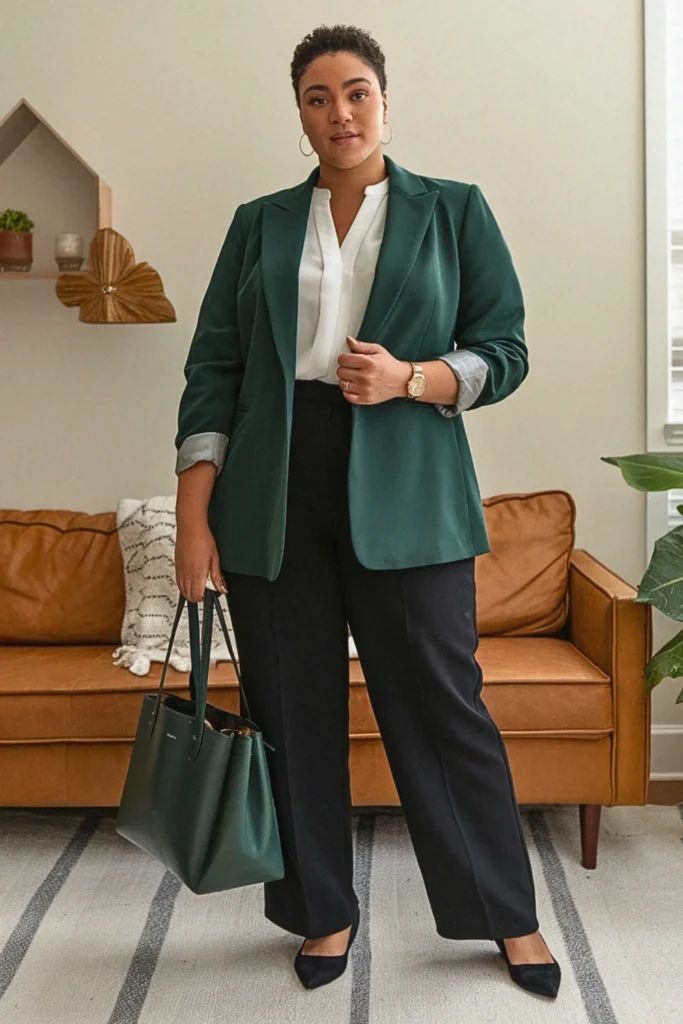
For example, a large tote can work beautifully with a simpler outfit. Think straight-leg jeans, a relaxed knit, and a clean jacket. The bag adds interest without competing with several other oversized pieces.
But with a very relaxed outfit, a medium-sized structured bag may give you a cleaner finish.
Try this simple check
Before you leave the house, look at your outfit as a whole.
Ask yourself:
- Is my clothing already quite voluminous?
- Is my bag adding another large shape?
- Does the bag sit at a point that makes that area look wider?
- Would a smaller or more structured bag create better balance?
You may not need to change your clothes at all. Sometimes changing the bag is enough.
If you’re trying to make your everyday outfits look more polished, How to Look Polished Every Day is another useful guide to explore.
The 1–2–1 Formula for Avoiding a Boxy Outfit
I guess you know the mistakes now. But knowing what makes an outfit look boxy is one thing. Knowing how to put an outfit together without creating that effect is another.
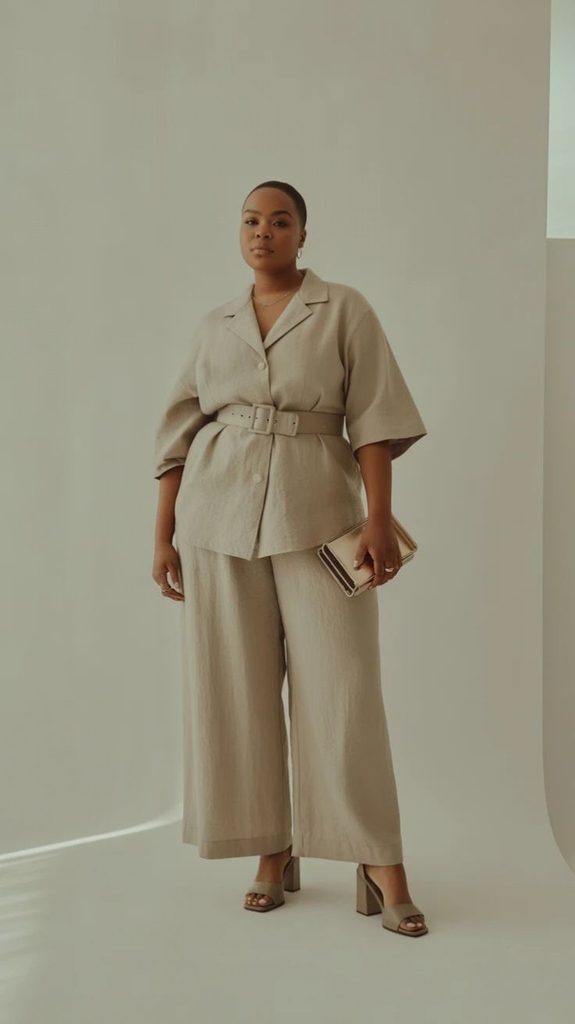
So here’s a simple formula you can keep in mind whenever you’re getting dressed: 1 relaxed piece + 2 balanced pieces + 1 defining detail.
Start with one piece that brings the volume. This could be wide-leg trousers, an oversized shirt, a flowy dress, or a relaxed blazer.
Then keep the other two main pieces a little cleaner. They don’t have to be fitted. They just shouldn’t add the same amount of volume.
Finally, add one defining detail.
That could be:
- A front tuck
- A visible waistband
- A shorter jacket
- Rolled sleeves
- A structured bag
- A little ankle showing
- A defined neckline
For example, try wide-leg trousers with a simple tucked-in top and a shorter jacket. The trousers give you the relaxed shape. The top and jacket keep the outfit from becoming one large block. The visible waistband adds that final point of definition.
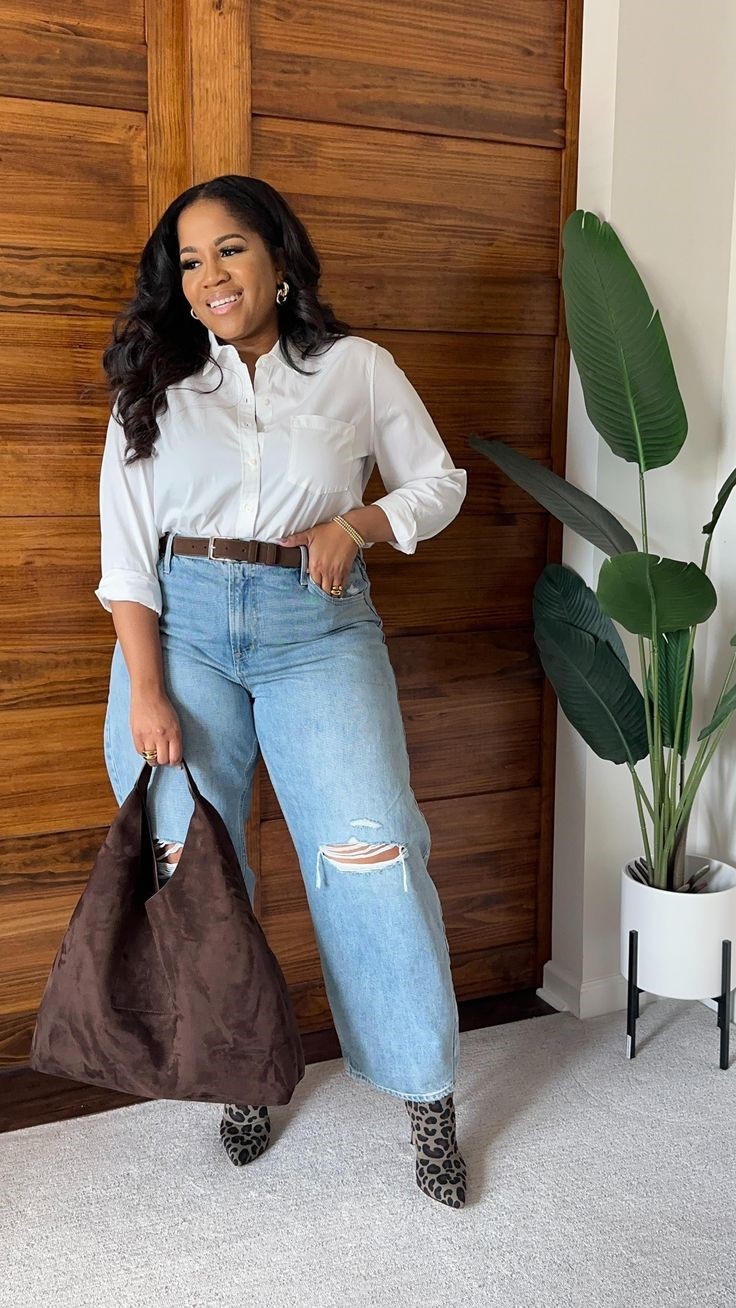
Or take an oversized button-down. Pair it with straight-leg jeans and a cleaner shoe. Leave the shirt relaxed, but add a front tuck or roll the sleeves.
The formula is not about following strict fashion rules. It’s simply a quick way to check your outfit before leaving the house.
If you have more than one very loose piece, ask yourself: where is my contrast?
If you can’t find it, that’s probably the part of the outfit that needs adjusting.
The One-Volume Rule for Busy Days
Some days, you may not have the time to stand in front of your wardrobe and work out every proportion. You just want to get dressed and go.
That’s where the one-volume rule can save you.
Choose one part of the outfit to carry most of the volume. Let the rest feel a little cleaner.
For example:
- Wide-leg trousers → simple top + shorter layer
- Oversized blazer → straight-leg jeans + simple top
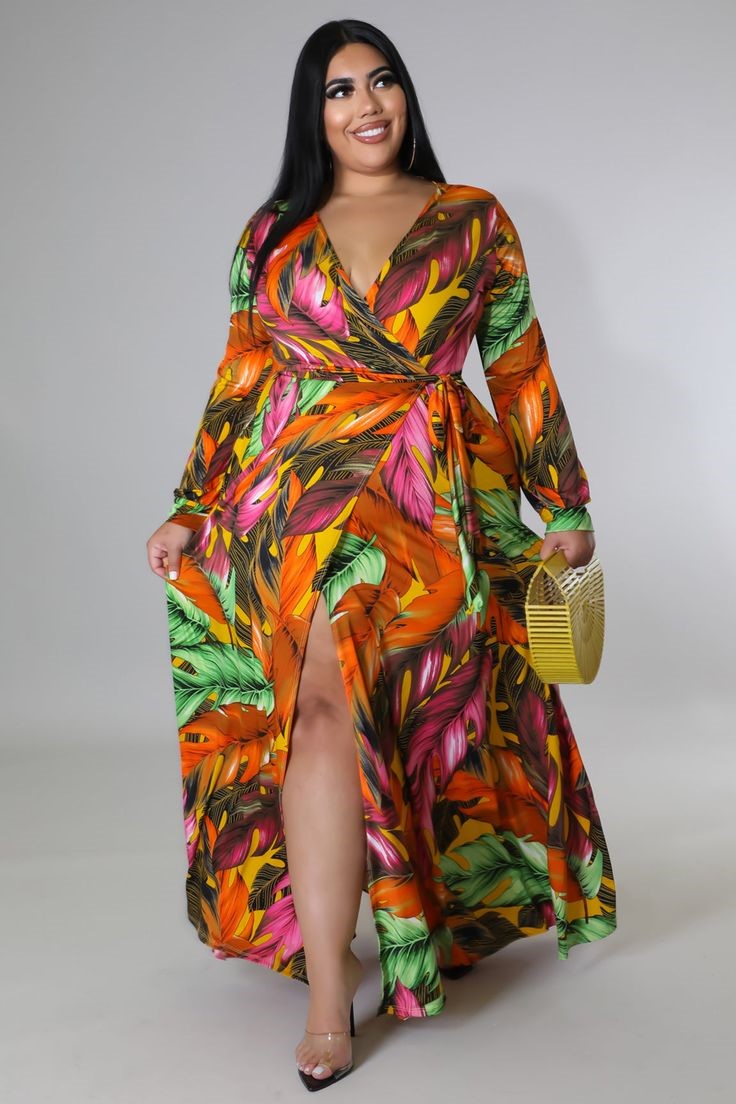
- Flowing maxi dress → smaller, structured bag + sleeker shoes
- Oversized sweater → straight or tapered bottoms
Notice that none of these combinations require tight clothing.
You’re simply giving the outfit one main area of volume. Everything else helps support it.
This is especially useful when you’re wearing pieces you already own.
And if you enjoy playing with different silhouettes, 41 Chic Plus Size Outfit Ideas That Look Effortlessly Stylish can give you more combinations to try.
The best part about this rule is that it doesn’t take much thought. Once you get used to seeing volume this way, you’ll start spotting the balance almost automatically.
Here Is What I Want You To Remember:
You don’t need to change your body to make your clothes look better.
Sometimes, the outfit simply needs a small adjustment. Check the proportions, change one layer, tuck your top, switch your shoes, or change your bag.
And don’t give up on clothes you love just because one outfit didn’t work. The problem may not be the piece. It may be how you styled it.
If you want more practical ideas for building outfits that feel like you, How to Dress Professionally Without Losing Your Style is a good place to continue.
You deserve to get dressed without constantly wondering if your body is the problem. Sometimes, it’s just the outfit.
One Comment